• Contact
  • About
  • ISSN 3049-9798
  • Authors and editors
NEWSLETTER SIGN UP
Bylines Scotland
Advertisement
  • Home
  • News
  • Politics
  • Society
  • Health
  • Environment
  • Science and tech
  • Podcast
No Result
View All Result
  • Home
  • News
  • Politics
  • Society
  • Health
  • Environment
  • Science and tech
  • Podcast
Bylines Scotland
Home News Economics

Is Community Wealth Building the key to the Just Transition and the Wellbeing Economy?

Community Wealth Building: what it is and its fundamental pillars

Hillary Sillitto by Hillary Sillitto
09-02-2024 06:13
in Economics
Reading Time: 5 mins read
A A
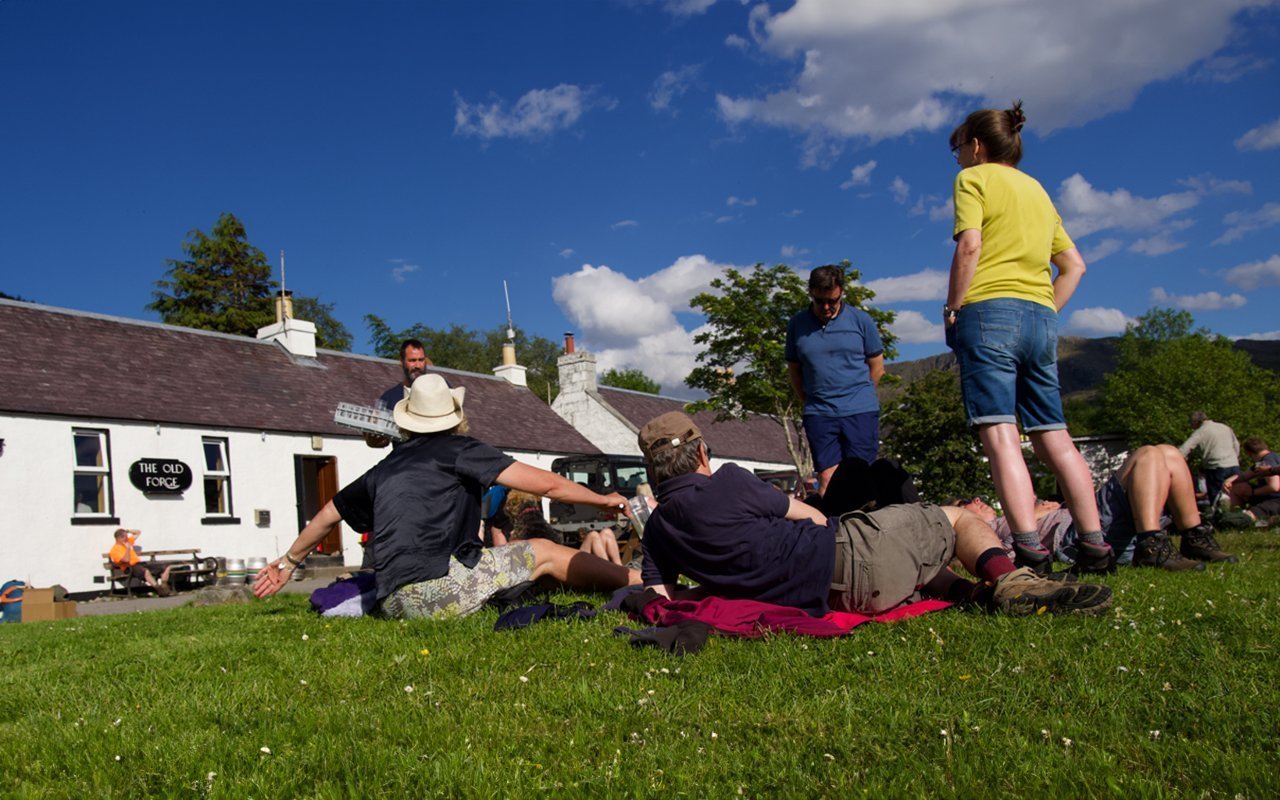
Community Wealth Building - The Old Forge Inn in Knoydart, re-opened after the Community buy-out

Communities do it for themselves - The Old Forge Inn in Knoydart, re-opened after the Community buy-out. Picture by the author printed with permission

Share on Bluesky

It’s enormously encouraging that the Scottish Government is committed to introducing legislation on Community Wealth Building (CWB) in the current parliamentary session (2021-26) and views it as a critical enabler for the National Strategy for Economic Transformation (NSET).

Last year it held a major consultation on The Contribution of Community Wealth Building (CWB) to a Wellbeing Economy. Following up on this, the think tank Future Economy Scotland has now released an inspiring report by its co-Director Miriam Brett setting out her vision for what we could achieve, if we used CWB to its full potential.

CWB could be transformative. It offers huge opportunity, but also presents huge challenges. It involves “rewiring the local economy”, one locality at a time, so that more wealth circulates within the community, and less is siphoned off to centralised bureaucracies and distant corporations. 

What is Community Wealth Building?

According to the Scottish Government, “CWB is an approach designed to tackle long-standing economic challenges and transform Scotland’s local and regional economies by considering the ways in which the public sector, in partnership with the private, third and community sectors, can ensure more wealth is generated, circulated and retained in communities and localities.”

The slightly different definition used by the Centre for Local Economic Strategies prioritises a people-centred approach.

 Brett is blunt: “[CWB] is a people-centred approach where the objective is changing the flow of wealth so that it is more generative rather than extractive…

“It is imperative that its meaning is not watered down or misinterpreted – particularly by local and national decision makers. For CWB to fulfil its transformative potential, its mission, vision and strategy must be comprehensively understood.” 

CWB is built on five pillars:

  1. Socially just use of land and property
  2. Plural ownership of the economy
  3. Making financial power work for local places
  4. Fair employment and just labour markets
  5. Progressive procurement of goods and services 

Most of these are areas where the Scottish Government is already pushing for change, so CWB offers a strategic framework to integrate these different strands of reform, from land reform to fair work, taxation, and public procurement, to make sure they are mutually reinforcing.

What problem is Community Wealth Building trying to solve?

Brett emphasises that conventional approaches to local economic development are usually top down, extracting wealth from, rather than regenerating wealth within the local community. Our financial system lends far more to financial and property markets than for productive investment, while efforts to attract inward investment detract from mobilising locally-led investment. This leaves local communities’ prosperity dependent on factors outside their control, and on distant management with no stake in the community.

The gap between aspiration and reality in jobs created by wind energy investment, the large number of people in precarious jobs on minimum wage, and the £10bn gap between our GDP and GNI, are but three of many symptoms of the underlying problem – which our ambitions both for a Wellbeing Economy and for a Just Transition demand that we solve.

Does Community Wealth Building work?

Brett cites a number of successful case studies for CWB, perhaps the most dramatic being Preston’s. Six anchor institutions brought together by the city council drove levels of spending with city-based suppliers up from £38.3m in 2012 to £112.3m in 2016. This approach led to the percentage of total procurement spending in the Lancashire region going up from 39% in 2013 to 79% in 2017, a rise of £74m in Preston and £200m in Lancashire.

What do we need to do to make it work? What could possibly go wrong?

Community Wealth Building is NOT business as normal. It is NOT slightly tweaking what we do just now. It is whole system change, to give local communities the agency and knowledge to take control of their own future, while rewiring structures at national level to remove obstacles to local initiative. Make no mistake, this needs champions and education at every level, based perhaps on the Nordics’ realisation that,

…rather than focussing on the economy, we should focus on the people, and let them take care of the economy when they are rounded and ready.

This is quite a challenge given the Scottish Government’s current centralising instincts! Reforming procurement habits and rules which currently seem to favour the big consultancies and international contractors will require sustained hard work. But as Brett makes abundantly clear, CWB is a key to unlock the benefits not only of the Wellbeing Economy but also of a Just Transition. And with such potential benefits, it is well worth the effort. Indeed, we cannot afford to fail.

More on Economy

Wellbeing economy serving people
Economics

The wellbeing economy: serving  the people in all aspects of their lives

by Lynne Copland
16 June 2023
Tags: Scottish economicsUK economics

Sign up for the Bylines Scotland newsletter

* indicates required

Consent for having Bylines Network store my submitted information

You can unsubscribe at any time by clicking the link in the footer of our emails. For information about our privacy practices, please visit our website.

We use Mailchimp as our marketing platform. By clicking below to subscribe, you acknowledge that your information will be transferred to Mailchimp for processing. Learn more about Mailchimp's privacy practices.

Hillary Sillitto

Hillary Sillitto

Hillary Sillitto was born and grew up in Scotland, graduating in Physics from St Andrews University and Applied Optics from Imperial College. He had a very interesting career in high-tech systems engineering, based in Scotland but travelling widely. After retiring he wrote a systems engineering book, “Architecting systems – concepts principles and practice”, and co-authored a visionary book on Scotland’s future, Scotland 2070 Healthy Wealthy & Wise. The only political positions he admits to are pro Scotland and pro his grandchildren.

Related Posts

Economics

Austerity: the banker-led assault on humanity

by David Murray
7 October 2026
Economics

Why we should insist on a Scottish currency from Independence Day

by David Murray
27 September 2026
President Donald Trump participates in a press conference with departing DOGE adviser Elon Musk, Friday, May 30, 2025, in the Oval Office. (Official White House Photo by Molly Riley)
Economics

Undue Influence: The politics and practicality of taxing the super-rich

by Geoff Thompson
31 August 2026
Economics

ScotRail app shambles was the symptom of a much bigger problem

by Duncan Thorp
26 August 2026
Economics

The Just Transition: Scotland’s “biggest act of self-harm”?

by Jess Hillary
22 August 2026
Next Post
The International Day of Women and Girls on Science illustration

Women in Science – a work in progress

PLEASE SUPPORT OUR CROWDFUNDER

BROWSE BY TAGS

Afghanistan Charity Christmas Climate Change Council areas Covid19 culture Defence Defence and security Democracy Devolution Election environment European Movement Fish Farms Glasgow History Holyrood Journalism Labour literature Monarchy Monetary policy NHS NHS Scotland Out and about politics Press release Pulse of the NHS Reviews Rights and freedoms Russia Scientific research Scotland Scottish economics ScottishIndependence ShipBuilding SNP society Sport and recreation Tories UK economics Ukraine Universal Basic Income Westminster

MY SCOTLAND

The restoration of ‘Killie’ civic pride

6 October 2026

LETTERS

Person typing an email

Letters to the editor

22 December 2023
Bylines Scotland

We are a not-for-profit citizen journalism publication. Our aim is to publish well-written, fact-based articles and opinion pieces on subjects that are of interest to people in Scotland and beyond.

Bylines Scotland is a trading brand of Bylines Networks Limited which is separate to, but allied with, Byline Times.

Learn more about us

No Result
View All Result
  • About
  • Authors and editors
  • Complaints
  • Contact
  • Donate
  • Letters
  • Privacy
  • Network Map
  • Network RSS Feeds
  • Submission Guidelines
  • Download the Bylines Network App

© 2022-2026 Bylines Scotland. Powerful Citizen Journalism. ISSN 3049-9798

No Result
View All Result
  • News
    • Economics
    • Education
    • Scotland
  • Politics
    • Brexit
    • Europe
    • Holyrood
      • Election 2026
    • United Kingdom
    • World
  • Society
    • Arts and entertainment
    • Culture
    • History
  • Health
  • Environment
  • Science and tech
  • Authors and editors
  • Podcast

Newsletter sign up

CROWDFUNDER

© 2022-2026 Bylines Scotland. Powerful Citizen Journalism. ISSN 3049-9798

-
00:00
00:00

Queue

Update Required Flash plugin
-
00:00
00:00