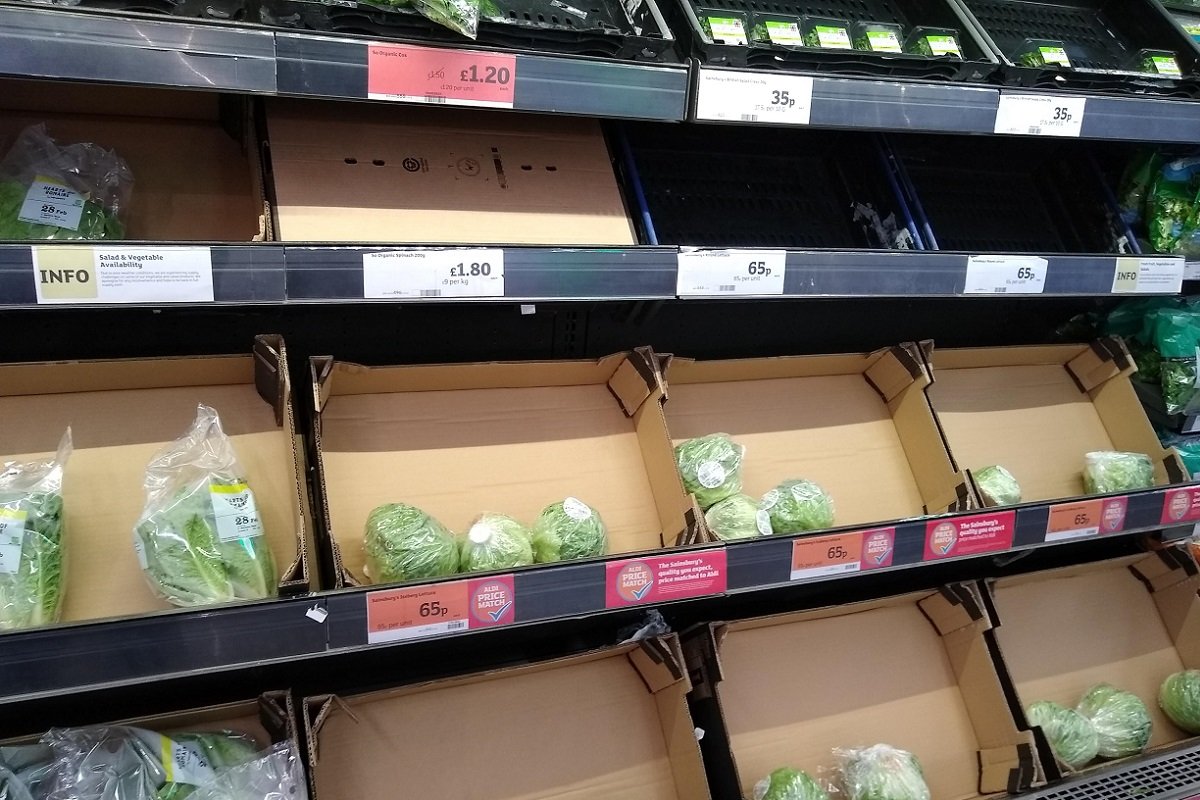
In 2022, three Canadian companies – Loblaw, Sobeys, and Metro – reported a combined $100bn in sales. In Britain, last year, four companies – Tesco, Sainsbury’s, Asda, and Morrisons – reportedly still held close to two-thirds of the grocery market according to a 2025 article published in Retail Times. The names may differ but the structure is the same. A small number of firms stand between two nations and the food on their tables.
Scotland’s food retail is not a separate system. It’s the British concentration seen from the north: the four names that dominate Aberdeen and Dundee are the same four that dominate Manchester, and the discounters eating their share in Glasgow are the same ones eating it in Leeds. What follows is one structure, read from two countries.
Canada: three giants and a closed discount door
Canada’s grocery market is concentrated, and the body that watched it said so plainly. The Competition Bureau’s 2023 market study found that most Canadians buy from one of five companies: the three domestic giants – Loblaw, Sobeys, and Metro – and the American entrants Walmart and Costco. In 1986, when the Competition Act was passed, there were at least eight large chains. Today there are only five.
The discount tier tells the rest of the story. In Canada the cut-price banners are owned by the giants themselves. Loblaw owns No Frills and Maxi. Sobeys owns FreshCo. Metro owns Food Basics and Super C. The Competition Bureau noted that this is different from countries where the large grocers face independent low-price competitors such as Aldi or Lidl. The discount door, in Canada, opens onto the same three companies.
Independents fare no better. Most are too small to run their own warehouses, so many buy the products they sell from the wholesale arms of Loblaw and Sobeys – from the very companies they compete against on the shelf. Concentration in Canada is not one layer deep. It runs down the supply chain as well as across the storefront.
Britain: four names and an open one
Britain’s market is concentrated too, but its discount door opens somewhere else. The historic big four – Tesco, Sainsbury’s, Asda, and Morrisons – long dominated the trade, and together they still hold around two-thirds of it, with Tesco alone near 28%. The “big four” is now as much a historical label as a current ranking: Aldi and Lidl together hold close to a fifth of British grocery, roughly double their share a decade ago, and Aldi has already passed Morrisons. What took that share is the part Canada does not have – independent German discounters – and most of what they gained came out of the big four.
This is the structural difference between the two food lines. In Britain the low-price challenge came from outside the incumbents and forced them to fight for the weekly shop. In Canada it was bought up before it could. The same competitive pressure produced a German discounter on every British high street and a giant-owned banner on every Canadian one.
The profit margin is the tell
Concentration is hard to see at the till. It shows up in the profit margin.
The popular explanation for a rising grocery bill is that the grocers are gouging – greedflation at the checkout. The Competition Bureau went looking for that and found something quieter and more structural. Canada’s largest grocers increased their food gross margins over five years by what the Competition Bureau called a “modest yet meaningful amount” – a trend that pre-dates the Covid 19 pandemic and the recent bout of inflation. If competition were biting, higher margins would cost these firms customers. Gross margin is not proof of a cartel, and it’s not net profit. It is evidence of market room: the ability to hold more of the food dollar without losing enough custom to punish the attempt.
The same buyer power shows up on the supply side. Britain’s Competition Commission examined this in 2008 and found that the largest retailers were transferring excessive risk and unexpected costs onto their direct suppliers – late changes to orders, retrospective deductions, fees that arrived without explanation. The same complaint – retroactive penalties, chargebacks, unilateral contract changes – is what drove Canada’s grocers and suppliers to the table. And the Bureau drew the line itself: Canadian competition law does not regulate imbalances in bargaining power, it said, and left the supplier relationship to a code being negotiated. Concentration was kept as the regulator’s problem; the squeeze on suppliers was handed to the code. The squeeze is not only a price at the checkout. It’s a pressure running back down the chain toward the farm gate.
Two retail referees, 15 years apart
Both countries have now built the same instrument to manage that squeeze, and both are rules about conduct, not structure. They built them 15 years apart.
Britain created the Groceries Code Adjudicator in 2013, on a statutory footing, to enforce a Groceries Supply Code of Practice that followed the 2008 investigation. It covers the14 retailers with UK turnover above £1bn, and its writ runs to Scotland. Its limits are on the record: it can fine a supermarket but cannot itself order compensation following an investigation, and it reaches only direct suppliers, not the farms and processors further back. From 1 July 2026 its sponsorship will move to Defra (Department for Environment, Food and Rural Affairs) explicitly to link it with a new Agricultural Supply Chain Adjudicator that reaches the producers it cannot – an admission, written into the machinery, that the retail referee stops short of the farm.
Canada’s version arrived on 1 January 2026. The Grocery Sector Code of Conduct is voluntary, run by a new office whose adjudicator can name a company that breaches it but compel little else. All five giants have registered, and a dispute-resolution process is now live. The economists who follow the file expect most shoppers will never notice it.
Britain built a statutory referee after an investigation. Canada built a voluntary one after a negotiation. One is old enough to be under review; the other is barely five months old. Both govern how the giants treat their suppliers.
The food shelf nobody regulates
Neither touches how many giants there are.
This is the inheritance the two countries actually share. Not the brands. Not the prices. Not even the codes. The structure: a food supply that narrows, at the retail end, to a handful of firms, governed by rules that police the firms’ conduct and leave their number alone.
Scotland has gone furthest in writing its own food law, and the result proves the point. The Good Food Nation (Scotland) Act 2022, passed unanimously at Holyrood, requires Scottish ministers, councils, and health boards to publish food plans and progress reports, scrutinised by a statutory Food Commission, with regard to the right to adequate food. It is a genuine act of food sovereignty – and grocery sovereignty is the narrow, retail layer of that idea: control of the route between producer and household.
The act reaches across health, environment, and community growth. It does not reach the four companies that own the route, and it cannot: the regulation of monopolies, mergers, and the abuse of a dominant position is reserved to Westminster. Holyrood can plan food, measure it, and make it a public outcome. It cannot, by that act alone, multiply the firms through which most households buy it. Scotland’s own consultation is candid about the floor beneath all of it: the country relies on imports and is unlikely to become self-sufficient. A concentrated retail layer sitting on an import-reliant supply is the resilience question stated in full.
The codes govern how the giants behave. The numbers – four and three – govern what the food costs and how hard the system is to break under strain. The number is not a law of nature. It is the sum of mergers waved through and doors left closed. Scotland and Canada have each chosen to police the manners of the few. Neither has chosen to make them more numerous. That choice is still on the table.


Friends of Bylines Network
There has never been a greater need for grassroots journalism that investigates the stories that really matter, holds power to account and champions the voices of everyday citizens. We are proudly powered by volunteers but what we do isn’t free.
STAND WITH US for independent, citizen-led journalism that makes democracy stronger, and you will even get some exclusive benefits.