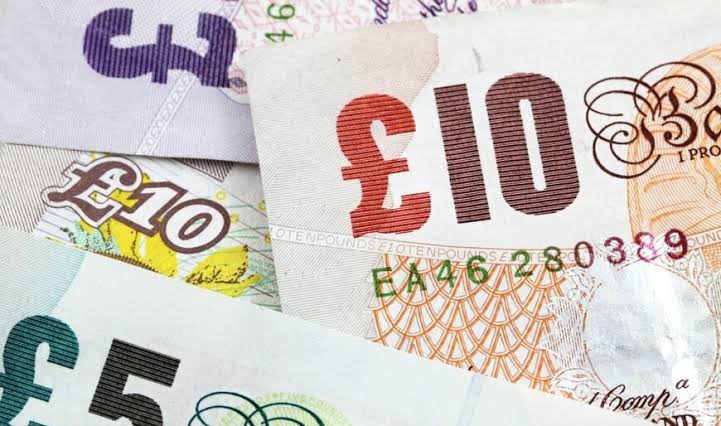
The Scottish Currency Group (SGC) has long argued that true independence for Scotland requires issuing its own currency and establishing a central bank ready to operate from Independence Day itself.
This is not a technical preference or a secondary detail; it is presented as the indispensable foundation for economic sovereignty, democratic control, and the capacity to build a resilient, productive economy serving the people of Scotland rather than external creditors or the residual UK institutions.
Drawing on the SCG’s response to common myths in The National, surrounding commentary, related contributions such as those associated with Cameron Archibald’s writing on currency mechanics, and the vigorous debates on X involving critics like Sam Taylor – employee of the pro-union lobby group These Islands – the insistence becomes clear: delay is not caution – it is subordination.
At the core of the SCG’s position is the distinction between being a currency issuer and a currency user. Without its own money, an independent Scotland would remain dependent on the Bank of England for monetary policy, interest rates, and the sterling payment and settlement systems.
The group has repeatedly warned of a practical risk: the UK Government could, during negotiations or immediately after independence, restrict or cut Scottish access to those systems. Imagine Independence Day arriving only for ATMs to freeze and card payments to fail at the supermarket because settlement relies on London infrastructure under foreign political control.
Preparing a Scottish central bank, treasury functions, debt office, financial regulator, and an independent inter-bank settlement system in advance eliminates that veto power. Preparation can begin years before any vote; implementation need not wait for post-independence improvisation. The SCG estimates multi-year planning is realistic and essential so that the institutions exist when the flag is raised.
Sovereignty is power
This operational readiness ties directly to fiscal and monetary freedom. With its own currency, Scotland spends in its own unit of account. It need never default on debt denominated in Scottish pounds, nor accept terms dictated by foreign bondholders or the residual UK.
Public investment in housing, energy, food production, manufacturing materials such as steel, aluminium and timber, and broader productive capacity can be prioritised according to democratic choices rather than the constraints of a foreign currency. The SCG emphasises a national development strategy focused on reducing import dependence and raising domestic output.
A floating exchange rate then becomes a useful signal of that productive capacity rather than a sacred cow to be defended at all costs through high interest rates that suppress the real economy. Historical UK experience – sterling’s long-term depreciation against the dollar and euro, the 1992 ERM crisis, and the post-1970s shift away from manufacturing towards finance – illustrates the costs of obsession with nominal exchange-rate defence over underlying strength.
But what about the vigilantes?
Critics frequently raise the spectre of immediate speculative attack and the supposed need for enormous foreign reserves. The SCG’s response in The National, authored by Jim Osborne, Cathy Gunn and Ian Stewart, directly addresses these myths. To short or speculate against a currency in volume, actors must obtain large quantities of it.
Acquiring Scottish pounds by selling other currencies would itself increase Scotland’s foreign reserves, which can then be used to counter pressure if desired. The group argues that a floating rate, reflecting genuine economic performance, removes the incentive and the vulnerability associated with defending an artificial peg.
Reserves accumulate naturally as residents exchange sterling holdings for the new currency to pay taxes, receive benefits and conduct domestic transactions. Estimates in related SCG material have pointed to tens of billions arising relatively quickly without years of prior accumulation under sterlingisation.
The idea that hundreds of billions must be stockpiled first, often linked to outdated pegging assumptions, is rejected as both unnecessary and counterproductive.
Cameron Archibald’s contributions, including earlier pieces examining currency introduction timelines and more recent discussion around the same themes, reinforce the practical feasibility. Other small European countries have transitioned currencies in recent decades; technical systems, production of notes and coins, account conversion and payment migration are all manageable with advance work.
Public-sector wages, benefits and tax payments in the new currency create rapid domestic demand for it. Mortgages and contracts can be addressed through clear transition rules. The point is not that every detail is trivial, but that the risks of delay – continued monetary dependence, vulnerability to external political leverage, and inability to invest assertively – are greater than the manageable challenges of orderly introduction.
Online discussion on X has sharpened these arguments. Sam Taylor and others have challenged the SCG’s characterisation of short-selling, noting that shorts typically involve borrowing the currency rather than first buying and holding it, and that regulatory restrictions on short sales or capital movements can carry their own costs, including complications for EU or EFTA accession.
The security of the Scottish economy will be protected. Scotland’s political will must not be overruled by the accession rules to trade institutions. EU or EFTA membership is a choice, a decision to be considered on its merits in pursuit of Scottish sovereignty.
The ensuing exchanges highlight genuine points of technical disagreement: how quickly liquidity develops, how markets price a new currency, and whether certain macroprudential tools are compatible with open capital accounts. Yet these critiques do not erase the SCG’s central claim. Even if short-selling mechanics are more complex than a simplified ‘buy first’ account, a floating currency backed by a strategy of building real productive capacity is less exposed than one locked into an indefensible peg or still reliant on a foreign central bank’s goodwill.
Taking control
Capital controls of the extreme sort that would bar European integration are not the SCG’s stated long-term vision; the priority remains domestic policy space from day one.
The insistence on readiness from Independence Day also reflects political realism. Sterlingisation or an undefined transition period leaves Scotland’s banks, payment systems and fiscal room subject to residual UK influence. That arrangement is not independence in substance. It postpones the very tools needed to address structural weaknesses, regional inequality, and the wellbeing economy that the SCG and many independence supporters advocate – tools such as targeted public investment that a currency-issuing state can fund without external permission.
Pre-planning signals seriousness to markets and citizens alike: the institutions will be ready, the conversion path clear, and the policy focus on raising capacity rather than defending an abstract exchange rate.
None of this claims frictionless perfection. Exchange rates will fluctuate; adjustment takes time; international credibility is earned through consistent policy. The SCG’s case is that those realities are better met with sovereign instruments in place than without them.
Myths of inevitable collapse, impossible reserves, or permanent vulnerability serve more as deterrents to independence than as accurate forecasts. By preparing a Scottish currency for Independence Day, Scotland secures the means to invest in itself, respond to its own economic signals, and escape the constraints of being a permanent currency user.
That is why the Scottish Currency Group remains insistent: political independence without monetary independence is incomplete, and delay simply prolongs the incomplete state.
THE AUTHOR IS A MEMBER OF THE SCOTTISH CURRENCY GROUP