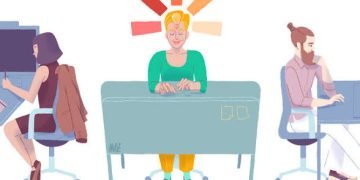

I can still vividly remember the moment I was diagnosed. It was a relief, sure, but more than anything, I had one overwhelming thought: “Yeah, obviously”. It had been so obvious to me and those close to me over the past several years; why had it taken the systems that were meant to spot it for me so long?
There is evidently something wrong in the system here. I was described as someone who simply “fell through the cracks” in what was largely assumed to be a robust system, but I have my doubts. Recently, I feel as if I am one of the few fortunate ones; I finally got the diagnosis I needed through a great deal of luck and timing. Had I sought help earlier, I feel I would have been let down by the school system, and any later could have been too late.
Schools aren’t built for neurodivergence
A recurring theme in all my report cards was a “lack of effort”. For all my years in education, every teacher said the same thing: I just needed to apply myself more. It didn’t matter that when it came to topics that I was really passionate about, I excelled. The guiding message I was given through schooling wasn’t to work on what I loved; it was to get decent grades across the board. Despite the messaging of schools in Scotland, I feel strongly that my interests and strengths were overlooked, all for the sake of normality; whatever that really means.
GPs stand at the gates
Regardless of the current state of the NHS, it has always been structured such that you see a general practitioner first, then they refer you up. While this system can work well for separating more serious conditions from others and directing specialist support more efficiently, there may be reason to doubt that this system works well for anything beyond the physical.
It’s almost a cliché to say mental conditions are invisible to all but the individual experiencing them, but it’s very much true. Some may trust a GP to spot a physical issue, diagnose it, and refer or treat it correctly. But some, like myself, don’t always have the confidence that a GP, who is definitionally not a specialist, will spot something they cannot see.
Many people across the country are left without care because one GP saw no issue.
We need wider education
Although things were immediately obvious to me after my diagnosis, I would be lying if I said there wasn’t some doubt lingering in my mind. The principal reason for this: people not understanding autism. I kept the fact that I was being diagnosed from many, but for those I did share it with, I was often told I didn’t “seem autistic”.
My typical response was to jest that I simply hid it well, and that wasn’t far from the truth. My main conclusion about what knowledge is lacking in this country is that people need to understand there’s more going on under the surface. It’s possible a lot of people only learn what autism is from pop culture, something sadly lacking in accuracy, leading many to have misconceptions about what autism is.
Scotland is in a position to care for neurodivergence like no other, and the government has promised more direct and immediate action after abandoning the LDAN (Learning Difficulties, Autism & Neurodivergence) Bill. But actions speak louder than words, and it’s action we need if we don’t want another generation of neurodivergent kids to face the same battle I did and continue to face.
The author notes that autism and other neurodevelopmental conditions are a spectrum, and that no two people with these conditions are the same. The NHS provides a wide range of information on the topic, which provides a general idea of how the condition may affect people.