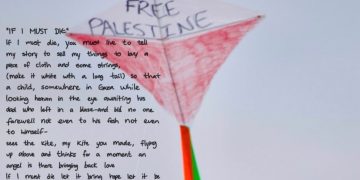
“They say the war is over. It’s not. It ended on TV. Here, there is no medicine. No shelter. Only daily torture.”
These are one woman’s words, but they speak for many. Increasingly, people in Gaza feel that they have been forgotten by the world. The ceasefire agreement which went into force on 3 October meant an end to the carpet bombing of settled areas and the constant orders to relocate, but individuals and families continue to be killed by the Israeli military. Meanwhile, hunger, cold and disease mean constant suffering and the type of fatalities which can be conveniently kept off the record by being dismissed as ‘natural causes’.
Exposed to the elements
It’s one thing to talk about ‘natural causes’, but in the modern world, the vast majority of people are used to keeping nature at arm’s length. With scarcely any buildings left standing in Gaza City, and many destroyed elsewhere, there is nowhere for Gaza’s two million surviving residents to go. Furthermore, the destruction of drainage infrastructure – a side-effect of heavy bombing – has exacerbated the effects of the winter rains so that large areas of the territory are flooded. And the caravans and prefab houses provided by charities have been stopped at the border by Israeli forces, kept out of reach of those who need them.
The result of this is a miserable set of choices. Some have chosen to shelter in ruins, but after a number of these ruins collapsed due to the onslaught of Storm Byron, there was a general realisation that this could be deadly. Others have set up tents beside their homes so that they are on their own land and not obliged to pay anybody rent. Still others have found space for their tents alongside others in large, spontaneously assembled camps.
The fragility of tents
If a tent is set up on high ground, it risks being torn apart by storms. This risk is lower if it has some degree of shelter, but then it is at risk of flooding, with some settled areas finding themselves under almost a metre of water. There, tents can be washed away, the roofs leak, and belongings within them are destroyed.
One man explained how the water came into the tent where his young children were sleeping, and he had to grab them and carry them to safety. In another area, where there was no safe place to climb to, a group of women used sandbags to build a fort so that even if they couldn’t keep the children properly safe, they could ensure that they wouldn’t get washed away.
At this time of year, temperatures in Gaza are usually in the low teens – not freezing, but low enough to present a danger of hypothermia, especially when it’s impossible to get warm. With their clothes and blankets soaked, and with malnutrition making them more vulnerable, Gazans are in serious danger. At least one baby died from the cold on the first night of Storm Byron, and there are widespread reports of symptoms consistent with pneumonia. Exhaustion is also a problem for those who have nowhere to lie down and sleep.
The danger of disease
After two years of hunger, most Gazans are in poor health. Infections spread quickly through the crowded camps where it is difficult to manage proper sanitation. Flood water all too easily gets mixed up with sewage – a problem even in intact cities with functional drainage systems, elsewhere in the world. Although there has as yet been no major outbreak of cholera, charities fear that it’s only a matter of time. A mass vaccination campaign which began in 2024 seems to be keeping polio at bay, but some cases have still been detected.
It’s flu season, and many have been struggling with that illness, which is particularly dangerous for older people. Flu and pneumonia together can be a deadly combination. There is concern about Covid-19, with only around a third of the population vaccinated. Then there are dangers associated with the frequent injuries caused by living in a rubble-strewn landscape, as well as unhealed wounds from bullets and shrapnel. Even small wounds are at risk of getting infected by dangerous pathogens in the flood water, and though most such problems could be easily treated elsewhere, antibiotics are in desperately short supply. The Israeli blockade has allowed only a token amount of medicine to cross the border.
Lasting trauma
The most vulnerable people in Gaza now have no shelter at all and frequently go for days at a time without food. With the worst of winter still to come, it is inevitable that fatalities will increase over the coming months. There are few Gazans now who have not lost a loved one and for some, the losses are well into double figures. Unsurprisingly, the region is in the grip of a severe mental health crisis, with some people unable to look after themselves because their minds can no longer take in what is happening around them. One Gazan said that he expects many people will have severe emotional trauma for the rest of their lives.
In some cases, that trauma has been deliberately instilled. There’s an increasing number of credible reports of torture in Israeli prisons, including sexual violence. It is only relatively recently that Palestinian culture has begun to open up to discussion about the latter, and survivors still face a strong stigma which makes many feel unable to seek help even from friends.
Fear of being forgotten
Exacerbating all these things is the fear of being forgotten. Gazans are not naive about the way that news’ agendas work. They understand that much of the world’s media, whose attention they struggled to get in the first place, has now turned its gaze elsewhere. Those who were surviving with the help of direct donations from supporters around the world unanimously report that those donations are drying up. Some families have received no support for many weeks and have nothing at all. Some feel betrayed. Others have concluded that this has happened because the war is officially paused, and people simply don’t realise that the Gazan suffering continues.
At Christmas, the thoughts of people all around the world turn to Palestine as it was two thousand years ago. This year, survivors of the war desperately need them to think of Palestine as it is today.
More on world.