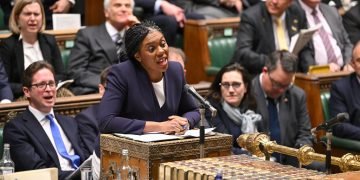
Remember when becoming a politician meant you’d actually done something in the real world first? Not anymore. Look around Holyrood or Westminster, and what do you see? A parade of special advisers, party researchers, and think-tank employees who went straight from university into politics, with many never having held a ‘proper job’.
The hollow men and women of politics
The Sutton Trust’s research tells the damning story: back in 1979, just 3% of MPs had worked in politics before being elected. Today? That figure has shot up to over 30% (Sutton Trust, 2024). What we’ve lost is politicians with important experience: who’ve managed organisations, built businesses, or actually delivered public services rather than just talked about them.
Scotland’s parliament was supposed to be different − more representative, more diverse. Fat chance. The political class has grown just as detached from real life here as anywhere. How can politicians who’ve never had to choose between heating and eating, never waited in A&E for hours, possibly understand what ordinary Scots are going through?
Manufacturing inequality: the how and why
Make no mistake, the obscene levels of inequality we’re seeing aren’t some unfortunate accident. They are by design. The Resolution Foundation’s research. An independent think-tank focused on living standards, confirms what many of us already feel − inequality in Britain has reached heights not seen since Victorian times, with all ten of the most unequal years on record happening since 2000 (Resolution Foundation, 2022).
This disaster has three main architects:
First, the financialisation of everything. Successive governments have deliberately deregulated finance, created tax systems that reward investment income over actual work, and repeatedly bailed out banks while letting ordinary people sink. Why? Because our political class is more aligned with the City than with constituents in places like Dundee or Govan.
Second, the war on workers. They’ve systematically dismantled labour protections and kneecapped trade unions, tipping power massively toward employers. The explosion of zero-hour contracts, gig work, and insecure employment isn’t some natural economic evolution − it is the result of specific policies that prioritise what they call “flexibility” (for employers) over basic security (for workers).
Third, the housing catastrophe. Our homes have been transformed from places to live into investment vehicles and pension substitutes. And let’s be honest about why reform never happens − a staggering number of our politicians are landlords themselves. They’re literally voting to protect their own investments at the expense of a generation locked out of housing.
Why do politicians keep marching down this ruinous path? Follow the money. The revolving door between ministerial office and cushy private sector jobs has created a perverse incentive structure. Former ministers routinely cash in with consultancy roles at the very industries they were supposedly regulating. Meanwhile, political parties grow increasingly dependent on wealthy donors who benefit from keeping things exactly as they are.
Brexit: an anatomy of a political disaster
If you want to see political failure in its purest form, look no further than Brexit. It’s the clearest example of how disconnected our politicians have become from reality.
Let’s be brutally honest − the referendum wasn’t called because the public was clamouring for it. It was a political fix. Cameron made this promise to hold a referendum in order to manage his restless backbenchers, not to address any genuine public concern about Europe.
And the campaign itself? A masterclass in everything wrong with our political culture. Complex, nuanced issues reduced to three-word slogans. Experts dismissed as “elitists” and not to be trusted (FT, 2016). Promises were made that anyone with a basic grasp of facts knew were pure fantasy − that £350 million a week for the NHS being the most shameless.
Then came implementation. Handed to ideological zealots with virtually no experience in international trade or diplomacy. People who consistently failed to grasp the mind-boggling complexity of unpicking forty years of integration.
But perhaps most damaging was the total failure to build any kind of consensus afterwards. Rather than seeking a Brexit model that might have united a divided country, successive governments chased increasingly hardline approaches that maximised both economic damage and social division. Even the government’s own economic watchdog, the Office for Budget Responsibility (OBR), continues to predict that Brexit will reduce UK GDP by around 4% per annum (OBR, 2024).
Media transformation fuelling decline
Our broken media environment is accelerating this democratic decay. The 24-hour news cycle rewards instant, knee-jerk reactions over thoughtful consideration. Politicians now obsess over how they’ll play on TV, or trending on Twitter, rather than actually governing well. They spend more time crafting social media messages than tackling complex policy problems (Reuters Institute, 2023).
Meanwhile, local journalism across Scotland has been decimated (APPG:Media, 2020), removing a crucial check on local politicians. Who’s left to hold your local councillor or MSP accountable when the local paper has either closed or been cut to the bone?
And look at our national media − addicted to conflict narratives, manufacturing drama over substance, rewarding politicians who create spectacle rather than deliver results. Political journalism has largely become just another part of the Westminster bubble, with the same revolving door that sees special advisers become journalists and vice versa. The result? An ever-narrowing window of acceptable debate.
The economics of failure
This political decline has real-world consequences. Both Westminster and Holyrood have overseen economic systems that have allowed wealth to concentrate among the already wealthy while living standards stagnate or decline for everyone else.
The tragedy in Scotland is that we have significant taxation powers that could be used to challenge this inequality. We could raise billions through progressive taxation if we wanted to. The Institute of Public Policy Research (IPPR) Scotland has shown how the Scottish government could raise hundreds of millions annually through straightforward tax reforms (IPPR Scotland, 2023) − but our politicians lack the courage to act.
The uncomfortable truth is that when your parliament is dominated by people from comfortable backgrounds, poverty remains an abstract problem rather than a lived reality. Economic hardship becomes something to discuss in committee rooms rather than something you have personally experienced.
Public trust in freefall
The consequences? Public trust is in tatters. The latest Scottish Social Attitudes Survey shows trust in the Scottish Government has plunged to just 47% − down from 61% in 2019 and a high of 72% in 2015. It’s now at its lowest level since devolution began (Scottish Government, 2024).
And it is not just Scotland. Across the UK, public mood toward politics has curdled into a toxic mix of anger, anxiety, exhaustion and disconnection. This is dangerous territory. When people lose faith in democratic institutions, they become vulnerable to extremist alternatives promising simple solutions to complex problems (The Independent, Mar 2025).
Rebuilding political quality
So how do we fix this mess? It starts with fundamentally changing how we select and develop political leadership. Scotland desperately needs pathways that bring people with substantial life experience into politics mid-career, breaking the stranglehold of professional politicians who’ve never worked outside the bubble.
Political parties must radically reform their selection processes. They need to start valuing ‘real-world’ experience over party loyalty and insider connections. That means dismantling the cosy networks that advantage those who’ve spent years climbing party hierarchies while keeping out people with proven capability in the real world.
We should also be experimenting much more boldly with citizens’ assemblies and other forms of deliberative democracy. Scotland’s Climate Assembly showed what is possible − 81 randomly selected ordinary citizens who managed to produce thoughtful, practical recommendations on addressing climate change (Scottish Government, 2022). Often more sensible than what comes out of Holyrood.
Creating a fairer society − concrete steps
“Fair words winna gar the pot boil”, as my granny used to say. We need specific actions, not just aspirations.
Here are five concrete steps that could make a real difference:
First, Scotland must use its existing taxation powers much more boldly. The council tax system is broken beyond repair – regressive, outdated and unfit for purpose. IPPR Scotland has shown how replacing it with a percentage of value tax could raise substantial additional revenue while ensuring people pay their fair share based on actual property values (IPPR Scotland, 2023).
Second, we need to stop treating housing as an investment opportunity and start seeing it as a fundamental human right. That means launching a massive public house building programme, introducing proper rent controls in overheated markets like Edinburgh, and creating tax policies that actively discourage property speculation (Shelter Scotland, 2024).
Third, we must strengthen employment rights to rebalance power between workers and bosses. Yes, many employment laws remain reserved to Westminster, but Scotland could still use its procurement muscle − ensuring government contracts only go to employers who pay the real living wage, offer secure contracts, and recognise trade unions.
Fourth, let’s expand public ownership in essential services. The privatisation experiment has failed spectacularly in energy, transport, and care. These vital sectors should be run for public good, not private profit.
Fifth, we should roll out participatory budgeting across Scotland, giving communities direct control over spending decisions. This isn’t just fairer − it produces better outcomes and helps rebuild democratic muscles that have atrophied through decades of disuse.
Education for leadership
We also need to completely reimagine political education. Scotland could pioneer new approaches to leadership development − creating fellowship programmes that identify and support accomplished professionals from all walks of life to enter public service (Carnegie UK, 2023).
Our universities and civil society organisations should be developing programmes specifically designed to equip people from diverse backgrounds − especially working-class communities, women, and ethnic minorities − with the skills, knowledge and networks needed to navigate our political system. The faces in Holyrood should actually reflect the Scotland that exists outside its walls.
Conclusion
Scotland deserves better than this. Our democratic future depends on addressing the fundamental decline in political leadership quality. And that means all of us − not just waiting for politicians to reform themselves (they won’t), but citizens actively demanding more and engaging in rebuilding our political institutions from the ground up.
The warning signs are flashing red. Across Europe and beyond, we’ve seen what happens when democratic systems fail − people turn to far-right extremist alternatives promising easy answers. The urgency of our task cannot be overstated.
The path forward isn’t complicated, but it seems utterly beyond our current political class: admit failure, take responsibility for the inequality they’ve allowed to flourish, and commit to rebuilding a society that works for everyone, not just their donors and friends. Whether they can summon the courage and capability to do so is the defining question of our time.
But, if they can not or will not lead us to a better future, then perhaps it’s time we led ourselves.
More in opinion.