



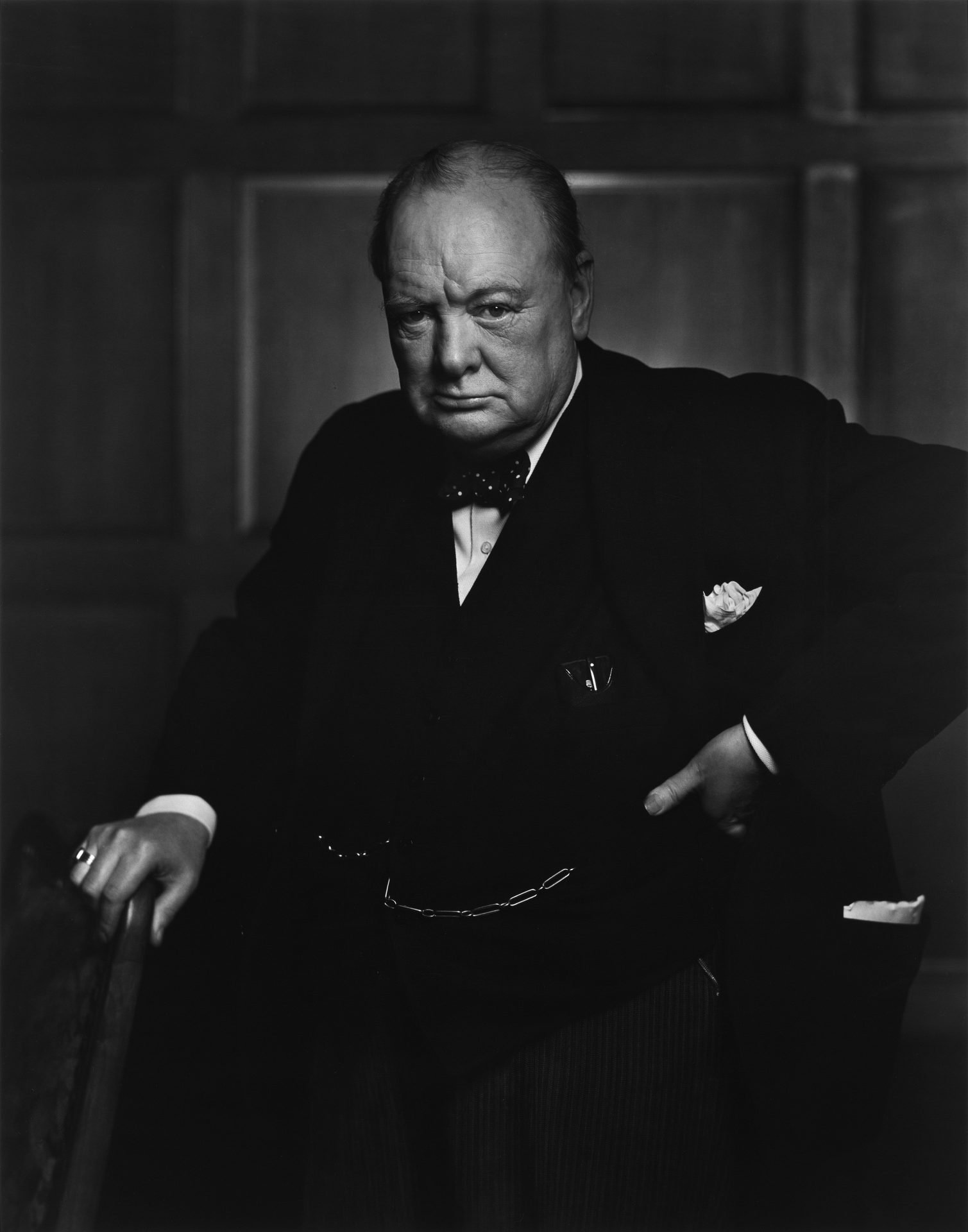
“In the Second World War every bond between man and man was to perish. Crimes were committed by the Germans under the Hitlerite domination to which they allowed themselves to be subjected which find no equal in scale and wickedness with any that have darkened the human record,” wrote Winston Churchill in The Gathering Storm, the first volume of his war memoirs.
In the 1930s, political extremes took hold of much of Europe. In the east, communism created the Union of Soviet Socialists Republics, an empire of 160 million people and a dozen countries. In Western Europe, by the end of the 1930s, fascism held sway in Germany, Italy, Austria, Spain, and Portugal.
Both ideologies were characterised by the cult-like adoration of their leaders, by militarism, authoritarianism and, particularly in Germany, by ethnic nationalism. In any of these countries, exercising anti-government free speech would at best lead to imprisonment. For many, death was the sanction.
Millions killed by far-right and far-left
Some estimates of Stalin’s purges suggest as many as 20 million Soviet civilians were slaughtered. The non-military deaths ascribed to Hitler and his Nazi regime were of a similar number. In Spain, the Spanish Civil War victory of General Franco’s Nationalists brought mass execution of his opponents. Firing squads killed at least 150,000 people. Arrest and long imprisonment without trial was common, as was forced labour.
Any semblance of fair law and impartial justice is always an early casualty of extreme politics. Courts, prosecutors, lawyers, police, and prisons bend to the will of the state. The outcome of any trial with even the smallest political aspect is wholly predictable. The state will win.
The dismantling of fair systems of law and justice usually leads to corruption, with people at each level taking advantage of their protected status as servants of the state to line their own pockets.
If you have connections to the ruling elite, you may survive or even thrive. If not, don’t expect the state to listen to your needs, worries, or concerns. Be a good citizen. Be loyal and supportive of the state. Do what you’re told. Don’t make waves.
Secrecy, corruption, the end of democracy
Moral corruption creeps in. The blind eye of the petty official and senior bureaucrat is turned away from horrors committed in the name of the state. How else could the Holocaust have happened, or Stalin’s murder squads been allowed to kill night after night, or Franco’s secret policemen put bullets in the heads of thousands of young men and women?
Secrecy is an essential tool of the extremist state. Neither the citizen, the press, nor the courts have any ability to ask serious questions of it. Elections may happen and parliaments sit, but no opposition to the government regime is allowed. Elections are rigged to ensure opposition voices are kept muted.
Hitler came to power in democratic elections. He soon dispensed with them. They become unnecessary when only one view of the world is allowed to prevail.
Forget about public accountability, judicial independence, or academic freedom. Forget about parliamentary scrutiny of the state. Forget about challenging the leadership in any way. Meanwhile, the state will be working away at rewriting history to suit its own narrative.
Nobody is safe
Any book, map, experiment, song, image, or idea the state doesn’t approve of will be excised. Education will offer no alternative thinking to that of the ruling elites. Culture becomes the creature of the regime. Rock bands, playwrights, composers, songwriters, artists, and poets are all monitored by the local equivalent of the Gestapo or KGB, lest they subvert the state and stimulate free thinking by the citizenry. The state thinks for the citizen and the citizen must obey.
Fear is the most common element to be found in countries with extremist regimes. Nobody is safe. Often those nearest the top live in constant fear of falling out of favour with the leader. In Putin’s Russia, falling from high windows is often the fate of his enemies.
Political extremism thrives on fear. It is everywhere. Minorities become scapegoats for the ills of society or the failings of the state. Livelihoods vanish when the state, through distorted laws or simple corruption, takes from citizens their factories, shops, homes, and anything of value.
Pro-Russia, anti-Ukraine
In Germany this month, the Alternative for Deutschland (AfD) party won a local state election by a landslide, taking 43.8% of the vote, with its nearest rival party taking just 17.2%. It is the first time since the Nazis held power in Germany over 80 years ago that a far-right party has recorded such a victory.
The AfD’s policies include ending military support for Ukraine, reducing sanctions on Russia, buying Russian energy, dissolving the Eurozone, a “patriotic” school curriculum, opposition to “woke” cultural policies, deportation of immigrants (even those with German citizenship), separate school classes for immigrants, and cutting restrictions on buying and owning firearms.
Currently, it is the politics of the far-right rather than the far-left that is winning votes and attention across the Western world. The history of the last 125 years tells us that political extremism always ends in tears. Let’s think carefully where we allow our politics to go.
In a speech in 1947, just two years after the end of the Second World War, Winston Churchill said: “Many forms of government have been tried and will be tried in this world of sin and woe. No one pretends that democracy is perfect or all-wise. Indeed, it has been said that democracy is the worst form of government, except for all those other forms that have been tried from time to time…”
This article was first published in The Scotsman on 12th September 2026.




