




Some diseases are said to be ‘Viking diseases’, having spread through the population in Viking DNA. These are mainly diseases that are most prevalent in people of Northern European descent. Some examples are Paget’s bone disease, multiple sclerosis, Dupuytren’s disease, amyotrophic lateral sclerosis, long QT syndrome and certain lung diseases. The list is long.
Even in the case of the Viking connection having been proved wrong by modern genomics testing, the story of the association remains as, for many, it is just too good not to repeat.
When I first found out we had two Viking diseases in the family, I felt sorry for my great-great-great- (however many times great-) grandmother who must surely have been violated by a Viking. After all, that is what history lessons told us: Vikings raped and pillaged. Somehow that touched my imagination and I spent years feeling sorry for my ancestor.
‘Medieval Twitter’
A few years ago, I came across a post on ‘Medieval Twitter’ which changed the way I thought about the poor woman. Maybe she wasn’t violated, rather she fell head over heels in love with a strong stranger who combed his hair, bathed weekly and changed his clothes regularly? I liked that idea. Go girl! Possibly the first feminist in the family.
What is St Brice’s Day?
But the post also raised new questions. St Brice’s Day? Never heard of it. And neither had the English people I worked with nor my English friends online. My quest to find out more began to take shape, but had to wait until I had the time and energy for it.
Simply speaking, St Brice’s Day is a Saints Day. The feast day of St Brice. Brice, also known as Britius, was a man born in France, around AD370. He was an orphan, raised by St Martin of Tours, and had a career in the Catholic Church. He was said to have been vain and ambitious, and not very pious, until he spent some years in Rome, where he changed so significantly that he became Bishop of Tours. His changed lifestyle made people consider him a saint. His feast day is 13 November. He died in AD440. St Brice is the patron saint of stomach disorders.
The Danes in England
Since the Danes first landed on British soil in AD793 there had been much fighting to rule the land. Danes had the habit, in their homeland, of sending their sons away when they became mature, only allowing one to stay and inherit the land of his father. The others had to go out and find a place of their own. This resulted in armies of young men going overseas to inhabit, or indeed, conquer foreign lands.
Reading chronicles (especially the Chronicles of John of Wallingford, the Anglo-Saxon Chronicle, and the Chronicle of Henry Huntingdon) from that time, they were brutal. But Scottish and English armies gave as good as they got. Over the years, some English kings even employed Danes to protect the shores and help fight enemies. So it was a two-way relationship, with atrocities from both sides, but also times of friendship, marriage between royal families to strengthen ties, mutual dependence and even benefits.
Danes came to rule a large part of the country (Danelaw, consisting of the largest parts of modern Northumbria, Yorkshire, Lancashire, the Midlands and Anglia). However, the death of a royal could change the relationships, with brothers trying to get more land and putting favourite family members in charge of certain areas that may have had Danes in charge before.
The massacre
In AD983, Æthelred succeeded to rule England after his mother killed his half-brother, King Ædward. Ædward had been a benevolent king and there had been years of relative peace with the Danes. But Æthelred wasn’t happy that the Danes ruled in many major cities in the country, Danelaw or not. He feared the Danes were plotting to kill him.
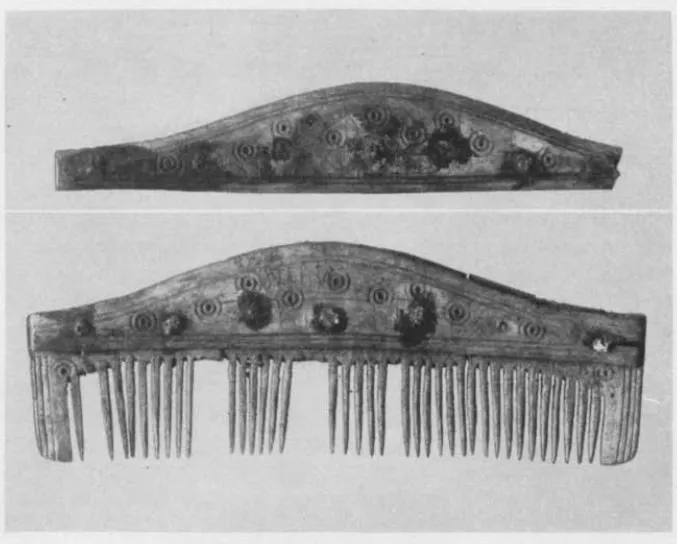
The Danes also caused problems for the native English because they had the habit (John of Wallingford Chronicles – page 558-559) of combing their hair, washing themselves every Saturday and changing clothes regularly. By doing this, they formed a serious threat to “the virtues of the married ladies and the daughters” who could not resist a clean, well groomed man. (In contrast, some say English men were not supposed to even wash their face as that would cause blindness.)
So Æthelred decided that on 13 November AD1002, a Saturday and, coincidentally, St Brice’s Day, the English in all provinces should destroy as many Danes as they could and also those living peacefully amongst them (John of Wallingford, p559, Henry of Huntingdon, book VI, p184, Anglo-Saxon Chronicle). Whether this decree reached the whole of his kingdom is not known, but the only reported violence against Danes was in Oxford.
According to the Chronicles of John of Wallingford, the English did not spare women or children, nor those who were in a relationship with a Dane or had one Danish parent. Twelve young men from London escaped via a boat on the Thames, but most others were mutilated and brutally killed. Some who were chased into a church, St Frideswide Monastery in Oxford where they hoped to be safe, died when the church was burned to the ground. It was later rebuilt in AD1004, as told by a Royal Charter.
The young men who escaped went back to Denmark to tell the Danish King what had happened and this led to revenge attacks from both Denmark and Norway. Æthelred’s English allies refused to help him as they considered the killing of the Danes to have been unholy. Æthelred fled the country to ask his cousin for help. Help did not come, so Æthelred returned to face the Danes and Norwegians himself. And so the fighting continued.
St Brice’s Day Massacre historical finds
The Royal Charter from AD1004 is the first document that describes the events as there is no copy of the decree from AD1002 that survived the times. A number of chronicles (some quoted here) mention the massacre, but if it was localised to Oxford, it is difficult to say.
In 2008, a mass grave of 35 young Viking men, dating from the time of the massacre, was found in the grounds of Oxford University. The skeletons showed evidence of injuries consistent with being killed unsuspectedly. One of the skeletons showed a familial match with a skeleton found in Denmark and the relatives are being reunited.
What have I learned?
There are two sides to every story, and neither the Danes nor the English were without blame for the fighting. But the St Brice’s Day Massacre was down to the English: King and countrymen.
And my great-great-great- (however many times great-) grandmother may have liked a well groomed man (or at least better groomed than most), and I like that idea.