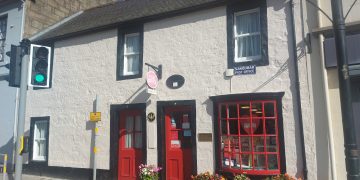
On Tuesday, 7 October, Women Against the Far Right gathered activists, politicians, and community voices in Glasgow to stand up against racism, Islamophobia, and the growing far-right threat in the UK.
Launching the Campaign
Katy from the Stand Up to Racism team launched the Women Against the Far Right campaign at Strathclyde University’s Teaching and Learning Building. Prominent women were invited to share their thoughts with the audience.
The room was predominantly filled with white women, with a smaller presence of immigrant women. Katy and Zamard Zahid hosted the show brilliantly.
Nicola Sturgeon’s message: standing against far-right forces
Former First Minister Nicola Sturgeon delivered a recorded message to the audience:
“Far-right forces are on the march here in the UK and globally. In Scotland, we mustn’t tell ourselves we are immune, because we are not. This is a moment for all of us to sit up, take notice and engage in the debates that will determine the future direction of our country and of the world.
The modus operandi of far-right forces everywhere is to find groups in society to scapegoat. Right now, asylum seekers and immigrants are top of their list, and one of the ways in which they are seeking to turn people against immigrants and asylum seekers is to say that they represent a particular threat to women. It is not true. Men who are immigrants or asylum seekers do not pose any greater risk.”
It’s worth pointing out a concerning trend within the far right, which I believe is driven by a white supremacy agenda. While they avoid confronting white people, they target Black and brown people, and individuals of other faiths. This selective targeting prevents them from holding the real culprits accountable for their actions.
Nadia El-Nakla: speaking truth to power
Nadia El-Nakla, a councillor in Dundee, as well as a Scottish psychotherapist and political activist, said:
“A far-right thug, Tommy Robinson, has shaken hands with the Israeli government. It’s happening in our time, and we can only imagine the conversation: ‘What do you need to succeed in the UK?’. This is the world we are living in. It’s causing unease. My everyday interactions have become tinged with uncertainty, not knowing how really people feel about me and my family.
“I have experienced racism my whole life – from school to adult life. Every woman who has had a similar experience like this was always told it’s in our own heads. I had evidence after evidence, and still, I was told I got it wrong. We know we didn’t get it wrong. It’s not just in our heads.We all remember how Western media dehumanised Palestinian people. I remember when I was 19, I phoned a Daily Express journalist because I didn’t have social media at that point. I said, “You’ve got this wrong.” The stories were nonsense. The fact that every BBC and Western media outlet was calling a Palestinian that was killed a ‘militant’ broke my heart. As a Scottish Palestinian, the rage and upset I felt – it is hard to describe.”
Reflections on racism and Islamophobia
After hearing Nadia’s speech, I feel like we immigrants are still on the same page in our lives. We are experiencing racism, discrimination, and Islamophobia a lot.
I remember when I submitted a complaint on one matter – despite having a lot of evidence and proof – they failed to deliver justice.
Things are happening in circles; it’s still going on. The more shocking fact for me was that they had invited one activist who has a long history of humiliating and insulting Muslim women while serving as a campaigner.
I have experienced this myself. I wanted to submit a complaint, but they never let it happen.
A group of people is working to help each other silence Islamophobia and racism. Mostly Asian and Arab women are scared to share such experiences because they believe that if they do, they will be in trouble, or that particular organisation will not provide them with support or help.
There should be an investigation into such activists rather than providing them with a platform to glorify their inhumane treatment.
It’s not just the people – the media is also playing an equal role in being biased. I remember in January 2025, the BBC and STV worked together on a joint project recording some episodes about my asylum journey. I believed it would be worthwhile to record and broadcast. However, after I posted a statement in support of Gary Lineker following his resignation from the BBC, they called me a few days later and said they had decided to focus only on Aamer Anwar’s documentary and would not air mine. It was clear to me why they changed their minds – they were afraid of my opinions and the truth.
Missed opportunities and the need for focus
The same activist shared a man-written poem and talked about the pandemic time when one male asylum seeker had attempted suicide and died.
I was wondering – this was a women’s event, meant to talk about what women experience, their challenges and difficulties, and how to resolve these issues.
There were many current examples to highlight:
- On 11 September, “Police launched an investigation following reports a Muslim schoolgirl was attacked whilst walking home in East Renfrewshire,” via STV source.
- On 25 September, “A man (28) was arrested in connection with an alleged rape in a lane near the station. Investigation ongoing,” according to STV.
Roz Foyer’s Call to Action
Roz Foyer, STUC General Secretary, received a lot of applause for her speech when she said:
“And we certainly don’t need Elon Musk or Tommy Robinson or any of the rest of the show. How dare they use us and use language like that! What would I do? I want us to get our rage on. I want us to link our arms. And I want us to get our marching boots on. We need to demand better. I want you all to join us at the Scotland Demands Better demo in October. Let’s go!
We need jobs that pay for women – like care jobs, like cleaner jobs. That is what we need to protect women.”
Equality, power, and real protection for women
I believe jobs help overcome financial burdens. Only a good environment, equal salaries, and protection for women at public and in their homes can truly protect women.
A job alone is not enough. There are misogynistic people holding positions of power, deciding what women can or cannot do.
Unfortunately, we are giving power to the wrong people – and this is the reason we need to struggle a lot.
I totally agree with her: the language which they are using for immigrants and women is horrific and shameful.
There should be serious consequences for anyone using any harsh or threatening language.
Inclusion and accountability
Events like Women Against the Far Right show how vital it is to unite voices from all backgrounds in the face of growing hate and division. But they also highlight the gaps that still exist – particularly the lack of representation for immigrant and Muslim women.
The real and clear enemy is not just the far-right groups, but also the hidden employees and bosses working in the charity sector – those who wear the mask of good people while dehumanising and insulting their clients and staff. This needs to be addressed and must have serious consequences.
In addition, paid activists – those working for a salary– can never be equal to immigrants who risk their lives and well-being and yet continue to stand firm and campaign actively. We don’t need anyone else to come forward and tell us what we’ve been through or what has happened. Let the real victims tell their own stories. Enough is enough.
Real progress demands inclusion, accountability, and open dialogue that recognises everyone’s experience. Only then can solidarity truly challenge the far right and create a society where all women are safe, valued, and heard.
More on politics:

CLICK HERE TO DONATE TO OUR CROWDFUNDER
HELP US BECOME STRONGER SO THAT WE CAN CONTINUE TO DELIVER POWERFUL CITIZEN JOURNALISM!