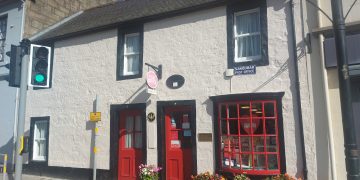
Mull is part of the Inner Hebrides, a mere 45 minutes from the busy port of Oban, on Scotland’s beautiful west coast. Many of you may know of Mull through your TV watching: think Springwatch, Winterwatch or even more famously Balamory. All feature parts of Mull’s rich natural history and tapestry that entertains children, both young and old.
Personally, I prefer my Mull a little less frantic than this.
Mull to me is a place of great natural beauty to be enjoyed at a pace I’m happy with. There are many great walks to be had on this island. Ben Mor, the island’s only Munro, Beinn Talaidh and Ben Buie offer three wonderful days on the hill, enough to satisfy the most intrepid of walkers in all seasons. However, this time I wanted a walk by the coast, a chance to enjoy the famous Hebridean light that attracts so many of our best artists to work and indeed settle on this island.


Treshnish Head
The Treshnish Islands are a group of eight uninhabited islands in the Inner Hebrides, west of Mull. You may recognise the distinctive silhouette of Bac Mor, the Dutchman’s Cap. They are now owned by the National Trust for Scotland and may be visited by a local tour boat. The islands are home to many seabirds including guillemots, razorbills and puffins. The waters surrounding these islands are home to basking sharks, minke whales, bottlenose and common dolphins.
This is indeed a naturalist’s paradise to be enjoyed in all seasons.
If wee boats are not your thing there is a seven-mile walk around Treshnish Head on Mull which offers wonderful views of these islands. Depending on which way you tackle this walk, it takes you from the car park in the quarry out past the most wonderful art gallery, the appropriately named Tin Shed Gallery, down to the deserted village of Crackaig. The path to the shore literally enables you to walk in the footsteps of the village of crofter families. Marvel at the remains of their stone wall crofts. Sit and picnic in the ruins, half close your eyes and imagine what their lives would have been like then, back in the day.


The walk continues out onto the raised beach with tremendous views across to the Treshnish Islands. On a September visit I heard the roar of the stags in the hills behind the beach and was tempted down onto the lower path that sees you skirt the beach under the cliffs, a great challenge for the nimble footed but to be avoided by anyone not sure footed on the rocks by the sea.
Complete your walk by passing through Treshnish Farm, a wildlife friendly place that combines farming with sustainable tourism. Holiday in award winning cottages on a working wildlife farm and learn what farmers can do to make their industry more environmentally friendly, whilst hosting visitors at the same time. I finished the walk with a greater sense of hope that there can be a future for farming in the most challenging of circumstances, and simultaneously maintaining a deep commitment to reducing the carbon footprint of the enterprise; whilst hosting visitors who may wish to come and marvel at both the scenery and the farm’s place in this environment.
Definitely worth a visit.
Mull weather
Many potential visitors are easily put off the west coast of Scotland by its reputation for challenging weather. Search ‘Mull weather’ and you may be overwhelmed with data. Autumn (September and October) is generally a good time of year to visit. The best advice is to come well prepared, with a good coat over trousers, a hat and a pair of gloves and you cannot go wrong.
Be warned. The isle of Mull can and does get under your skin. It’s addictive. The ever-changing natural light, the wildlife, and the great outdoor challenges it presents in abundance.
Oh, I almost forgot, there’s always a great wee day out to be had in Tobermory as you’re waiting for your boots to dry for the next big day out!