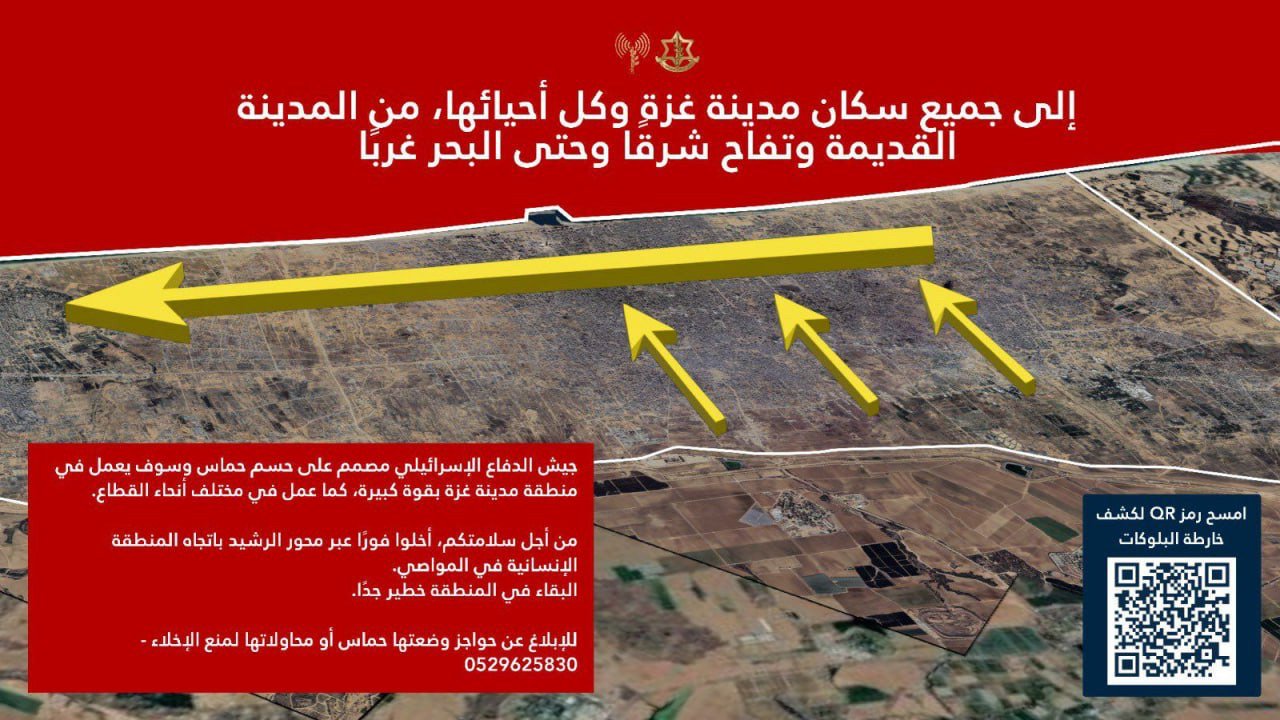
“To all residents of Gaza City and all its neighbourhoods, from the Old City in the east to the sea in the west: the IDF is determined to defeat Hamas and will act in The Gaza City area with great force, as it has operated throughout the Strip,” read the leaflets, thousands of which have been air-dropped across Gaza City. “For your safety, evacuate immediately via the Rashid Axis towards the humanitarian area in al-Mawasi. Staying in the area is very dangerous.”
By now, Gazans are used to receiving leaflets like this, and know that they need to be taken seriously. Those who have tried to remain behind in areas previously designated for evacuation have faced brutal house to house searches or been forced out by walls of fire as residential areas are set alight. But never before has such a large area been targeted in this way. Before the start of the war, Gaza City was home to around 600,000 people, and many of them remain, even though most are now living in tents, their former homes destroyed.
To many people, the response to such leaflets may seem obvious: if you’re likely to be killed if you stay where you are, get out. IDF spokespeople have commented that remaining in the city will be very dangerous. But the narrative the Israeli regime is pushing – that its forces cannot be held responsible for the safety of those who ignore the warning – ignores the fact that there are many people for whom fleeing is impossible.
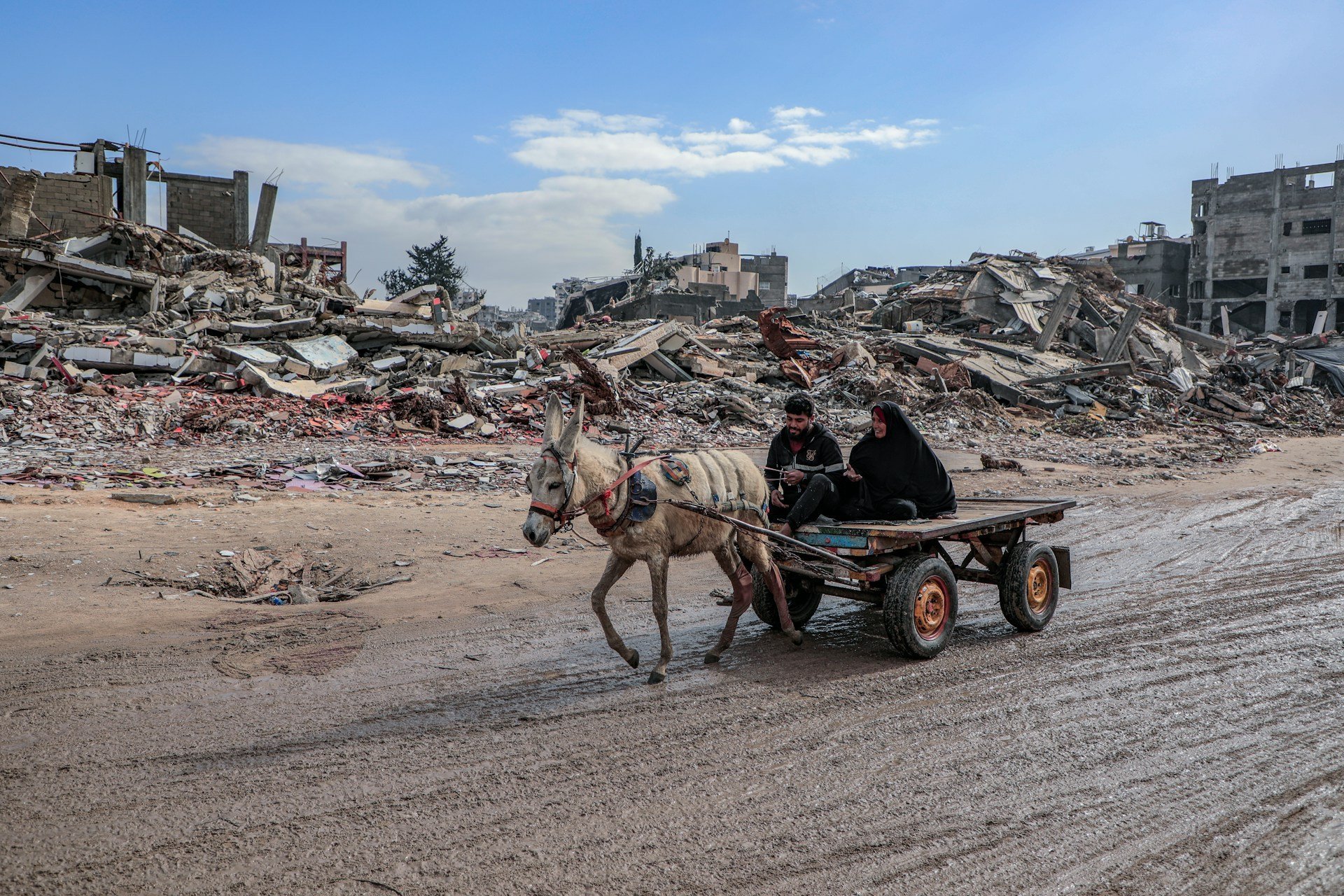
No help for wounded, disabled or elderly people
There have been headlines in Western media about the ongoing incidents in which Palestinians have been shot when visiting aid distribution points, but they tend to focus on the numbers killed. For every one of those, many more are injured, affecting their ability to walk or to carry their children or essential supplies. Then there are the injuries caused by collapsing buildings, the shrapnel injuries caused by bombs, and the effects of disease which has run rampant in the places where it’s impossible to access clean water. This means that a lot of people are physically unable to relocate without transport.
In addition to this population, there are people who were chronically ill or disabled before the war began. There are fragile elderly people, parents with young children and those who are heavily pregnant. One woman told me that she could theoretically carry her son, who is in poor health, but if she did so, she would not be able to take anything else with her. This wouldn’t just mean letting go of sentimental attachments – it would mean having no blankets to keep them warm, and no food or water. She couldn’t guarantee being able to find these things at the other end of the journey.
Al-Mawasi: humanitarian zone or concentration camp?
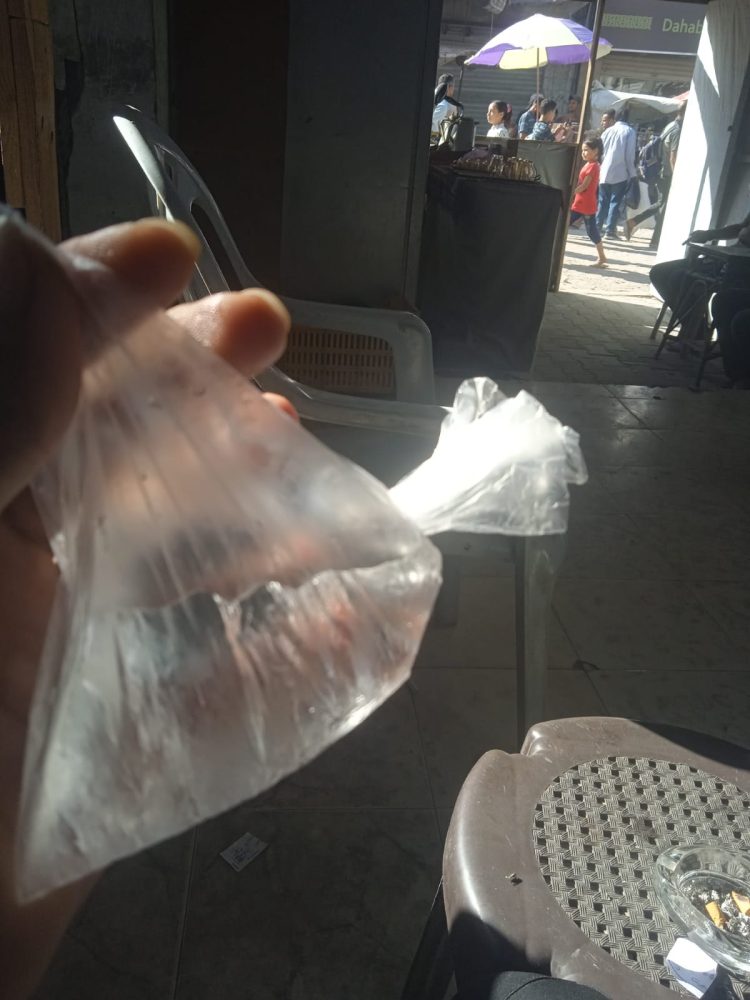
People who have already arrived in al-Mawasi report that for a supposed humanitarian zone, it is very poorly supplied. The IDF claims to be ‘working on’ extending a water pipeline, but at present there is not enough for basic hygiene purposes. People have to buy water in bags just to have enough to drink. There is also a desperate shortage of tents, with one in five families forced to sleep on the streets.
This is not only hard on the body, but adds to the psychological trauma of the situation. Sleeping outdoors means not being able to get away from the sight of smoke and other signs of violence. It means having nowhere private to change clothes or go to the toilet – and a build-up of untreated human waste in the streets adds to the disease risks.
If you ask around, most Gazans will tell you that it costs $1,000 to get transport from Gaza City to al-Mawasi. This is because there are now relatively few working vehicles available, and the cost of fuel is considerable. It’s a dangerous road, with reports of quad copters shooting at people as they travel, so drivers who return repeatedly to transport strangers expect to be compensated for the risk they are taking. They carry as much as they can. Some people are still trying to hang on to precious belongings that give them a sense of normality, personal identity and connection to past generations. Others need to transport medical equipment, or just basic supplies.
“They claim that the south is safe, but there is daily bombing and killing in the south,” said one disillusioned individual, who has a toddler and a newborn baby to look after, so cannot go without a tent. “Death is everywhere, north, centre and south.”Others do not believe that the Israelis have any genuine interest in offering them a place of safety. “Netanyahu and Zionism no longer want to strip us of our culture,” one woman said. “They are killing us daily until we are annihilated, as happened previously with the Native Americans. A real genocide is taking place.”
More on World.