




Scotland has a court ruling. Canada has a court hearing. Both concern what the inheritance from Westminster still permits, and what it still constrains. The question is older than the Scotland Act and older than the Canada Act. It has not been answered in either nation.
The court they share
In November 2022, the UK Supreme Court ruled unanimously that the Scottish Parliament cannot legislate for an independence referendum without Westminster consent. The five-judge bench, led by Lord Reed, found that any referendum bill “relates to” the union and the sovereignty of the UK Parliament, and is therefore beyond Holyrood’s competence. In reaching that conclusion the court explicitly cited the 1998 Quebec Reference from the Supreme Court of Canada. Westminster’s court, citing Westminster’s other inheritance, telling Scotland the question of leaving was not Scotland’s to ask.
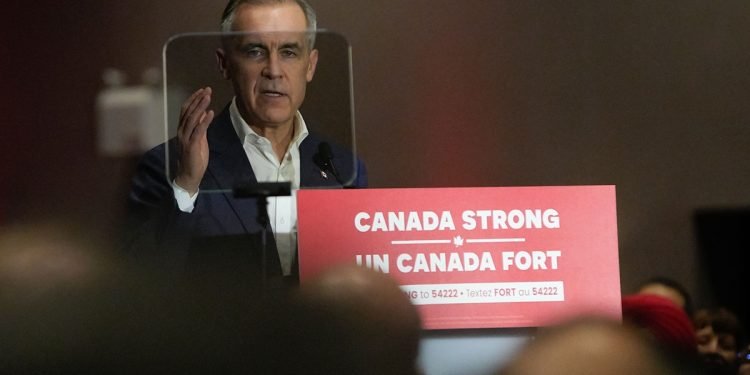
In March 2026, the Carney government appeared at the Supreme Court of Canada in Hak v Attorney General of Quebec, asking the court to impose new limits on Section 33 of the Charter – the notwithstanding clause that lets provincial legislatures override Charter rights for five-year periods. Five provinces filed factums, four defending the unrestricted use of the clause. The federal attorney general – backed by Manitoba and British Columbia – filed against them. Mark Carney told the House of Commons that “it is the responsibility of the federal government to defend [the] Charter”.
Two highest courts. Two cases. One inheritance. Scotland is contesting the right to ask the question of exit. Canada is contesting the scope of rights override inside the federation. The parallel is in the constitutional logic, not in the remedy sought.
The settlement that did not settle
The Constitution Act, 1982 – the document that brought the Canadian Charter of Rights and Freedoms into force – was Schedule B of the Canada Act 1982, an act of the UK Parliament. Westminster, with Canada’s request, ended its own legislative authority over Canada by legislating for Canada one last time. The Constitution Act was proclaimed in Ottawa on 17 April 1982 by Queen Elizabeth II – Queen of Canada, also Queen of the United Kingdom – and Prime Minister Pierre Trudeau. The Government of Quebec did not sign. It has not signed since.
The 1982 settlement did not settle the deeper question either. Section 35 of the Constitution Act recognises “the existing aboriginal and treaty rights of the aboriginal peoples of Canada” – but does not define them. The foundational relationship between Crown sovereignty and the prior sovereignty of the peoples already on the land was not resolved at first principles in 1982. It was deferred to the courts, to be defined right by right, case by case. Sparrow came in 1990. Tsilhqot’in in 2014. The constitution that came home from London came home with the deeper sovereignty question still open.
Scotland’s settlement is the Scotland Acts of 1998, 2012, and 2016. Each is an act of the UK Parliament. Each devolved more power. None addressed the constitutional question. The 2014 referendum produced a No vote on the highest turnout in modern Scottish electoral history. The decade since has been the slow retraction of the Sewel Convention – that Westminster will not normally legislate on devolved matters without Holyrood’s consent – through the EU Withdrawal Act, the Internal Market Act, and the legislative habit of post-Brexit Westminster governments of both colours.
Two settlements. Both written in Westminster. Neither completed in the nation receiving them.
The architecture under load
Schedule 5 of the Scotland Act 1998 reserves to Westminster “the Union of the Kingdoms of Scotland and England” and “the Parliament of the United Kingdom”. The 2022 court read the second reservation as the sovereignty of the UK Parliament itself. Section 33 of the Canadian Charter is the same Westminster reflex worn differently: the parliamentary override, written into the Canadian constitution as the price of patriation in 1982. Different mechanisms. Same inheritance. The Westminster system holds the constitutional questions and lends the rest down.
The mechanism is in active use. In October 2025, Alberta Premier Danielle Smith’s UCP government invoked Section 33 to pass Bill 2, the Back to School Act, forcing 51,000 teachers back to work, imposing a four-year contract that teachers had rejected by nearly 90%, and stripping local school boards of bargaining authority until 2028. Six weeks later the same government invoked Section 33 again – Bill 9, the Protecting Alberta’s Children Statutes Amendment Act – to shield three laws restricting transgender youth from court review. Two uses of the inherited Westminster override in two months, both at the level of children and education.
Scotland already has its own demonstration. In January 2023, the UK government invoked Section 35 of the Scotland Act for the first time in the twenty-four-year history of devolution, blocking the gender recognition reform (Scotland) bill from receiving Royal Assent after it had passed Holyrood on a cross-party majority. The Scottish Government took the order to judicial review and lost. The Westminster veto over devolved legislation that “modifies the law as it applies to reserved matters” sat unused for twenty-four years, then was used as written.
Reform UK is now polling for second in the Holyrood election on 7 May 2026, on a manifesto launched in Bishopton in March that promises to use devolved tax powers to bring Scottish income tax into line with the rest of the UK and to scrap net-zero commitments. The architecture that lets a future Westminster majority override Holyrood by simple parliamentary vote is the same architecture that blocked the gender recognition reform bill in 2023.
Different countries. Different fronts. Same inheritance, used as written.
The drafts on the desk
The Scottish constitutional drafts exist. The Scottish Government published Scotland’s Future in November 2013, and more recently Building a New Scotland: Creating a modern constitution for an independent Scotland in 2023. That paper proposes an interim constitution, a Constitutional Convention, and a referendum on a permanent text – and proposes replacing Westminster sovereignty with the sovereignty of the people who live in Scotland. The texts are not the obstacle.
The Canadian constitutional sentences exist too. Meech Lake (1987–1990) and Charlottetown (1992) were the two completed attempts to bring Quebec into the 1982 settlement. Both were negotiated to text. Both failed. The constitutional sentences they contained – distinct-society recognition, Senate reform, an amending formula Quebec could sign – sit on the shelf, fully composed, unsigned. The constitutional refoundation that would make Canada the author of its own constitutional document, rather than its receiver, has not been attempted in a generation.
Both nations have written more constitutions than they have adopted. The unfinished work is not unwritten. It’s unsigned.
What sits on whose desk
The shared inheritance is Westminster. Not as parliament, not as monarchy, but as constitutional logic. The centre writes the document, lends it outward, and retains the architecture that defines what the document means. Both nations received their constitutional architectures from that same authoring centre. Neither has completed the transfer of constituent authority that would make either nation the author of its own. Scotland is trying to write itself out of the inheritance. Canada has not yet written itself fully into anything else. And the architecture neither has finished is now being used by the actors most willing to use it.
The Scottish question sits on the desk of a Holyrood government heading into a 7 May 2026 election cycle in which Reform UK is polling for second place, with no Section 30 order in prospect from a Westminster government of any party.
The Canadian question sits on the desk of a Carney government working – through the courts of an inherited constitutional architecture – to limit the mechanism a UCP premier has just used twice in two months.
Westminster wrote both constitutions. Neither nation has finished writing its own.
More from Ben Beveridge

Bylines Network Gazette is out!
The latest Bylines Network Gazette is out now. Become a Friend of Bylines Network or upgrade to a paid Substack subscription, and you will get access to a vital collection of citizen articles and stories.
Journalism by the people, for the people.




