



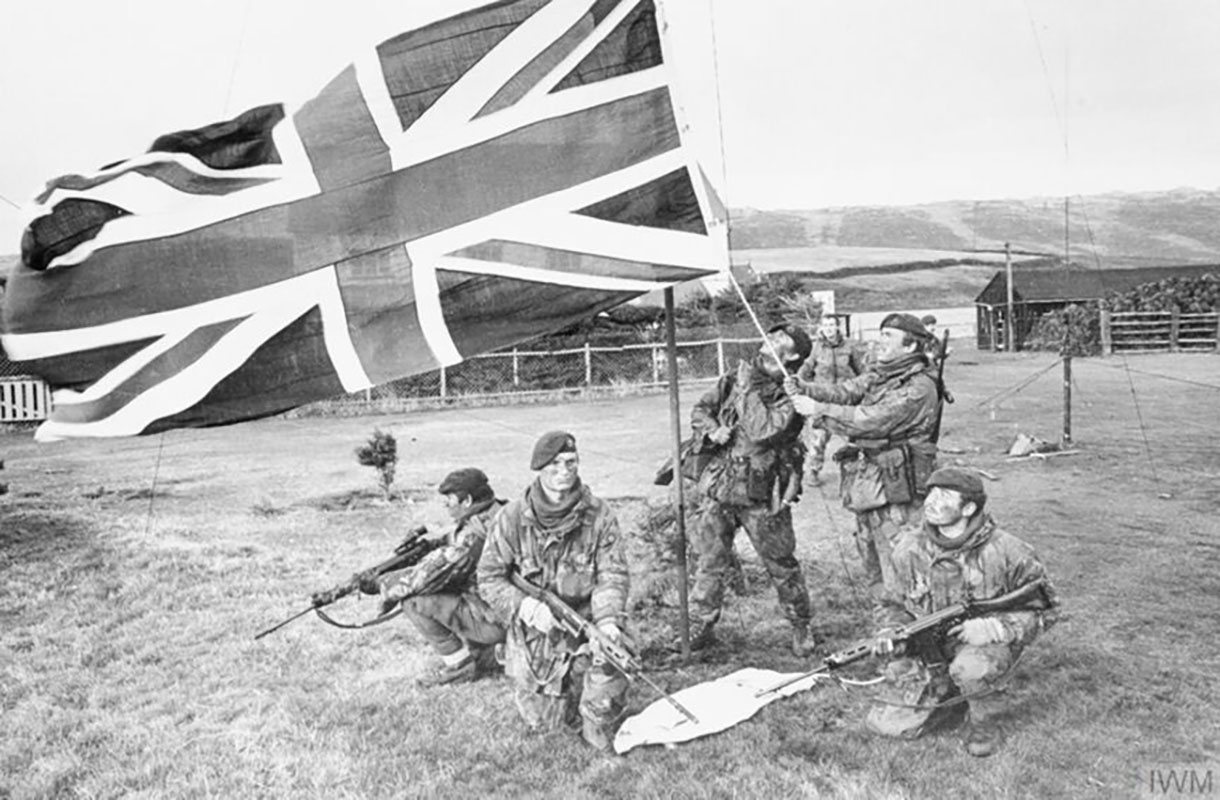
As Margaret Thatcher grew the British state, she threw cash at the army and the police. The trident missile system cost around £23bn in today’s money. She raised army pay and spent more on defence infrastructure, using the 1982 Falklands War to divert attention from her domestic woes and to flaunt British militarism.
Thatcher recruited more police and paid them more. Powers to stop, search, arrest, and detain were part of her drive to break the unions during the miners’ strikes of 1984-85.
Keir Starmer’s recent decision to raise military spending to 5% of GDP is a continuation of this tradition. He wants to build a dozen new nuclear submarines, make more bombs and nuclear warheads, and raise digital and cyber capabilities.
The US continues to push its military hegemony. Military spending has now grown to a trillion dollars a year, about three times the size of China’s. The obliteration of Gaza is only the latest example of the country’s violence.
This long-running militarist neoliberal tradition belies the supposed emphasis on ‘freedom’ and a small, unobtrusive state. In reality, state power grips us ever tighter.
The power to intimidate everybody
Another side to the bullying: Bill Clinton’s chief of staff, James Carville, famously said that he’d “like to be reborn as the bond market so that he could intimidate everybody”.
What he meant was that he envied the ability of international investors to discipline governments by threatening to pull their money out whenever governments did things they didn’t like.
As Carville saw it, if governments stepped out of line by spending too much – perhaps on education, health or pensions – investors would sell their debt, driving up interest rates and forcing politicians to backtrack.
He thought the bond market was all-powerful. We were cowed into thinking that “there was no alternative” to market discipline, as the famous saying went.
But the real absence of alternatives was built. Neoliberals may have liked asserting their power, but the suggestion that bond markets would punish transgressors if they dared to raise social spending or look after people was overdone.
Pay less attention to the man behind the curtain!
Bond vigilantes are a bit like the man behind the curtain in The Wizard of Oz – scary, but not quite as impressive as they’re supposed to be. Governments or central banks regularly step in to stabilize bond markets and set yields, making supposed market discipline a policy choice rather than an inevitability.
Many governments built up social spending and welfare states without suffering vigilante action, including Sweden, Denmark, Germany, and Canada.
Former UK Prime Minister Liz Truss’s infamously disastrous 2023 mini-budget spooked the markets not because of excessive social spending – there wasn’t any – but because it was unplanned, unfunded, and uncosted, and because it included tax cuts so extreme that no sane person could accept them.
Although neoliberals like the thought of intimidating the general public, their threats are less impressive than they think.
Even the fact that Trump and co. started intervening more in certain parts of the economy proves that neoliberalism wasn’t a cohesive ideology or part of the natural order of things. It was a deliberate programme, not an inevitability.
And so neoliberalism was built, backed by violence, and its proponents wanted us to think we all had to submit to financial market diktats. The supposed lack of options was deliberately enforced. Alternatives did exist, after all.
Behind the curtain
Zombie neoliberalism lurches on in the world regardless of its decrepitude, having created those billionaires and infiltrated governments. It’s an awesome beast, with immense power.
But it took decades of state and corporate effort to build, and it needs vast military and ideological power to sustain. It wasn’t a natural and cohesive ideology with the ability to decide how we look after each other or to run every aspect of our daily lives. It continually needs to be fed, and it won’t continue on its own.
As soon as we realise that neoliberalism was constructed and needs to be defended through violence, its vulnerabilities shine through. The curtain has been drawn to one side, and many people are beginning to peer behind it.
We can construct our own alternatives: ones that are less violent and oppressive, don’t exploit people and the natural environment, and allow us to support one another.
The final part of the series will consider some ways in which we can act to start to see off the zombie for good.
More on economics.


Your voice, your story – independent powerful citizen journalism.
Consider supporting us monthly
A newspaper costs approximately £60.00/year, you can enjoy Bylines Scotland for £36.00/year – please think about supporting independent citizen journalism




