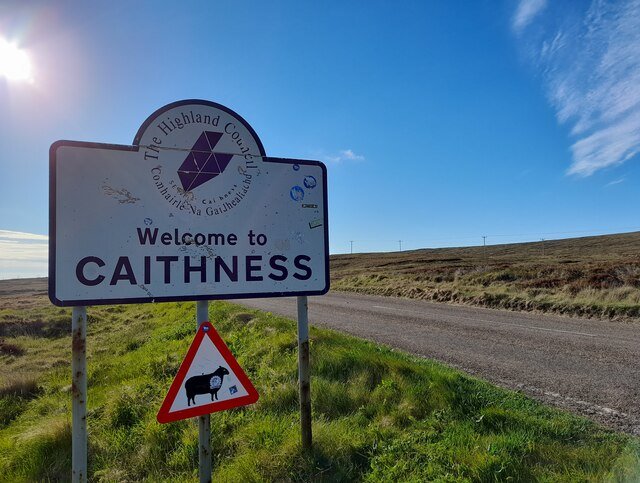
Returning to Glasgow from a wonderful holiday in Orkney, I drove, in the comfort of a modern car, through the beautiful scenery of Caithness: the land of my ancestors. It was a part of Scotland I had neglected for some time! As I meandered through breathtaking scenery, I marvelled at the early construction work of the many historic and picturesque harbours. Arduous work done without the benefit of modern tools and lifting machinery, conducted against the vagaries of the sea.
Standing on the sea wall of Lybster Harbour I watched the waters pound on the rocks piled up so very long ago. The lovely scene hid the hardship of the lives of the fisher folk who pulled their daily catch up the steep climb, evidenced by the path of well-worn rocks. It also hid the fact that many men and boys were lost to stormy seas while bringing in the herring; their oars, and sometimes bodies, later found washed up on local beaches.
The Highland Clearances
People fleeing homelands to escape hardship is not new or confined to those from foreign shores! The countries of these islands bear witness to the movement of peoples. Travelling on through the lush pastureland of Brora and Golspie, I saw a land deemed by wealthy landowners to be too good for my ancestors. They, and hundreds of others, were forcibly removed from it during the Highland Clearances to make way for sheep. The evicted were left struggling to support their families on the much poorer land they were obliged to settle on, some having to learn new skills to do so.
As I drove through the awesome and breath-taking majesty of the Great Glen, I spotted a little café overlooking Loch Oich. There, I enjoyed the best of lunches on the decking area which gave a panoramic view of hills and water. In the warm sunshine I watched the mist rolling silently down the hillside, disappearing as the sun stole it away. Good Scottish food accompanied by beautiful Scottish scenery!
Here I was reminded that many years ago my ancestors made a similar journey. They travelled to Glasgow to find work to feed their families when the fishing industry or unproductive soil could no longer support them. They sought a living, in what for them was a strange land, far from home, friends and any support network.
An arduous journey
For them there was no well-surfaced road or the comfort of a modern car. No lovely little café with tasty food. Their journey would have been long and gruelling, and tinged with great sadness at leaving their homes and extended family. They would have felt a mixture of hope and trepidation for what awaited them in Glasgow. For them, and other displaced people, Glasgow proved not to be the land of plenty. They struggled to find employment, they suffered illness in crowded hovels, and death claimed their family members. Some eventually returned, not richer but much sadder, to Caithness.
A gift to descendants
While some stayed in Caithness and fought to ensure their children found a better life, others travelled abroad to seek work, a better future, and happiness. Their descendants, of which I am one, now travel from many lands including America, South Africa, and Australia as tourists, seeking out the land of their ancestors. We travel in comfort and with the financial means to have a pleasant visit. We come to enjoy the beautiful scenery and to pay tribute to the struggle of those who lived in times past.
Returning home to a lifestyle our ancestors could not have dreamed of, we realise that it was their struggle which paved the way to make it so. It is those in the past who gave those in the present a better future. For this I say, your struggle is remembered and thank you.