



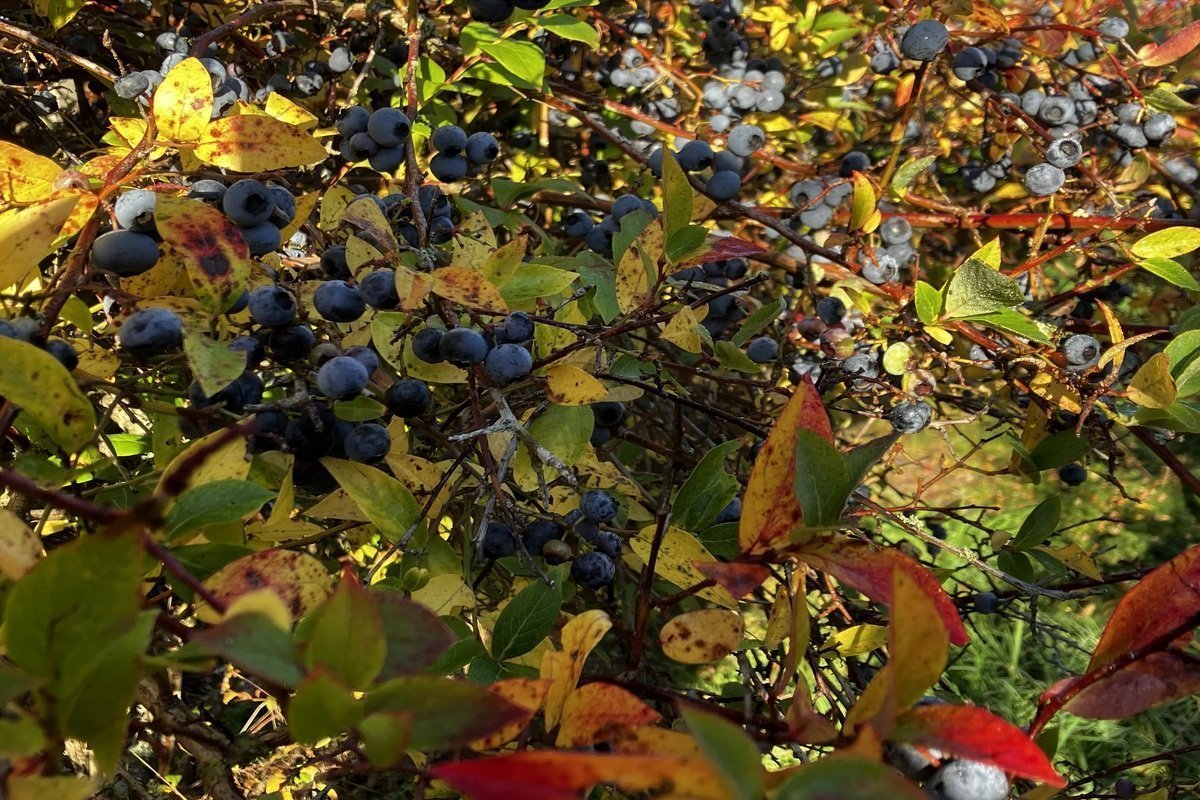
Thomas Thomson has been a family business for over 100 years. According to their website, mill manager Thomas Thomson bought Bramblebank and Westfield Mills in the late 1800s. He grew the business, opening up a number of new mills along the banks of the River Ericht. In tandem with the textile industry, the business also focused on growing soft fruit, in particular raspberries. The town was so famed for its production of soft fruit that it became known as “Berry Toon” or “The Berry Capital of the UK”.
Since 2022, Thomsson Farm ‘Pick Your Own Blueberry’ sessions have raised over £50,000 for more than 60 local community groups and charities. Now in its fourth year, picking started on 29 August 2025. Every penny raised goes straight to local causes, and each year they aim to beat the total from the last year. It’s a fantastic way to enjoy the outdoors, gather some delicious berries, and give back to the community. Bylines Scotland attended on the Tayside Woodland Partnership day. Money raised on Thursday 16 October went to this charity.
Globalisation – the elephant out on the fruit fields
Thomas Thomsson once grew soft fruit to supply our supermarkets. However, this is no longer the case. The price of 500g of blueberries in Tesco is currently £4.50 or £9.00 per kilogram. Local grown produce cannot be brought to the market at an equivalent price.
According to Bluberries Consulting, China now leads world production with 32% of the worlds blueberry production, followed by the United States (16%) and Peru (13%). Labour costs and the lack of people willing to do harvest the soft fruits in the fields, has seemingly rendered the blueberries of Blairgowrie unviable as a commercial concern.
Brexit
The disaster that is Brexit and its effects on the farming sector throughout the UK is well documented. Cambridge Econometrics estimate that by 2035, the UK is anticipated to have three million fewer jobs, 32% lower investment, 5% lower exports and 16% lower imports. The report states that the UK will be £311bn worse off by 2035 due to leaving the EU. Migrant farm workers are no longer welcome onto UK farms. This hurts farmers and the wider UK economy. This does not make easy reading.
Research into the negative impact Brexit has had on the food industry estimates that:
“Compared with pre-pandemic and pre-UK exit from the EU, 76% of farmers said it was ‘more difficult’ to recruit seasonal workers to staff picking and packing teams in 2021 than in 2019.’’ Pre- Brexit many seasonal farm workers were recruited from Eastern European countries such as Poland and Romania. This cheap and flexible form of labour is no longer available to farmers, making harvesting difficult and often more expensive.
Deeper malaise in the Scottish economy
Bylines Scotland believes that the offer to local charitable organisations to pick blueberries in Blairgowrie is symptomatic of a deeper malaise in the Scottish economy brought about by Brexit and the pressures of globalisation.
Woody Guthrie recorded in 1948, written about the migrant farm labourers who were the mainstay of the fruit harvest in California, USA.
‘’ Goodbye my Juan, goodbye Rosalito
Adios mis amigos, Jesus and Maria
You don’t have a name when you ride that big aeroplane
All they will call you will be ‘Deportee’ “
His words are as poignant in Scotland in 2025 as they were back in 1948 California.
This has become such a serious issue that the Chancellor Rachel Reeves now says that the economic damage caused by Brexit is forcing her to take action in the Budget.
Out here in the Blairgowrie fruit fields, some of us are asking, what took you so long?
More on Scotland:


Subscribe to our newsletters
Each of our Bylines sends a newsletter every month and we also send out a ‘Best of Bylines, featuring a selection of the best articles from across the network




