



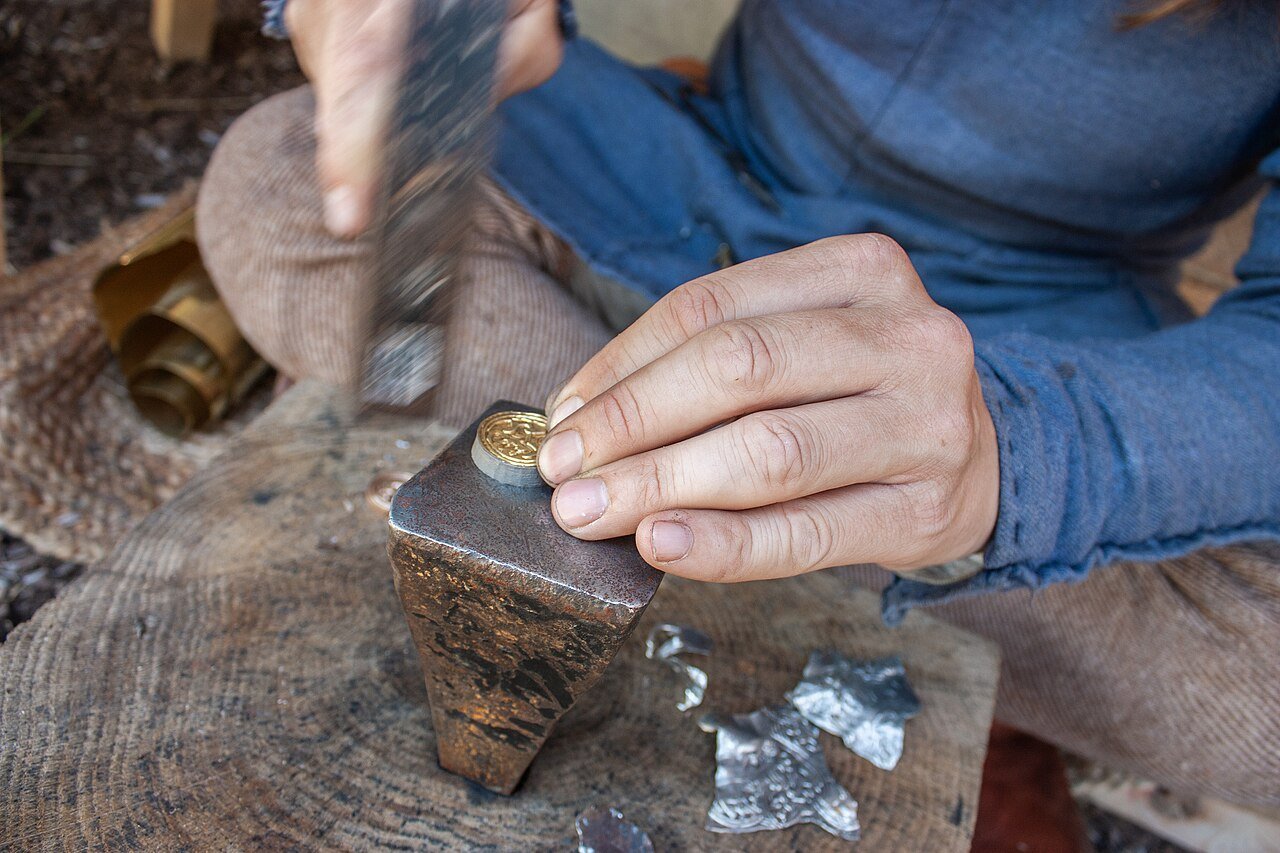
Imagine a world without money as we know it. No notes, no cards, no abstract digits on a screen. Labour directed at survival, debts tallied in grain or cattle, the idea of ‘earning a living’ is meaningless. A subsistence lifestyle for the vast majority, a population working dawn to dusk to survive, experiencing slow, incremental advancement, if any, for millennia.
Then, around 650 BCE in the hills of western Anatolia, a Lydian king or merchant stamps a lump of electrum with a lion’s head. A coin is born. Within two centuries, similar tokens are created and circulate from the Yellow River to the Aegean. Around the same time, philosophers in Greece, India, and China begin asking questions that still preoccupy us: What is justice? What is the self? What is real?
The coincidence is striking. Is it mere coincidence?
David Graeber, in his magisterial Debt: The First 5,000 Years, refuses to treat it as such. The work situates the invention of coinage at the epicentre of what Karl Jaspers called the Achsenzeit – the Axial Age (800–200 BCE). Graeber’s thesis is radical: the minting of the first true coins did not merely facilitate trade, as most modern economists state; by mobilising and directing productivity, it reorganised human society.
By issuing fungible tokens that could only be obtained through labour or tribute, authorities created the conditions for wage labour, impersonal obligations, and – crucially – leisure time for a new class of thinkers, with a wider proportion of the population freed from illiteracy through organised education.
From this perspective, coinage is not a footnote to the Axial Age; it is its material engine. The sovereign authority was the prime mover controlling the unit of account that literally purchased the leisure that birthed philosophy.
The Axial triad: coins, soldiers, sages
Graeber identifies three innovations that appear almost simultaneously across Eurasia: Coinage; standing armies and Axial ideologies.
The synchrony is uncanny. In Lydia, the first electrum staters appeared around 630 BC. By 546 BC, Croesus – whose name becomes synonymous with wealth – issues pure gold and silver issues. In Greece, Pheidon of Argos supposedly introduces silver coinage c. 600 BC; Athens follows with its ‘owls’ c. 525 BC. In India, punched-marked silver karshapana circulate under the Nandas and Mauryas from the late 4th century BC. In China, spade and knife money give way to round Qin coins by 221 BC.
Meanwhile, the intellectual explosion:
- Greece: Thales (fl. 585 BC) to Socrates (d. 399 BC).
- India: Upanishadic sages to the Buddha (c. 563–483 BC).
- China: Confucius (551–479 BC) and Laozi (c. 6th century BC).
- Israel: Deutero-Isaiah and the codification of monotheism.
Graeber’s insight is that although these seem to be parallel developments; they could be systemic.
The sovereign issued tokens and declared them the sole means to discharge tax liabilities. To acquire them, subjects had to redirect labour toward state priorities like growing surplus grain, rowing triremes, or mining silver.
The leisure multiplier
The state’s stroke of genius was to invert the flow of value. It did not wait for markets to generate surplus, it commanded surplus by issuing tokens that were otherwise unobtainable.
A peasant who owed one silver drachma to Athens had three choices:
- Produce goods or services the state or its agents would accept in exchange for coin.
- Perform labour directly for the polis.
- Default and face penalty.
Each option channelled effort into the sovereign’s ledger. The aggregate effect was a surge in directed productivity: fields were intensified, workshops proliferated, trade routes secured.
The state collected tax through threatened violence. However, through time subjects could experience theresulting collective social advancement through earning the currency.
The surplus did not vanish into royal coffers. It funded:
- Navies and armies, leading to regional stability.
- Public works, such as aqueducts, roads, theatres, gymnasia.
- Citizens’ wages, including jury pay, assembly attendance, festival subsidies.
In Athens, 20,000 citizens received a living wage for public service. Pericles could boast that poverty was no barrier to political participation because the polis paid its poorest to deliberate. The Greek word for leisure – scholē – gives us ‘school’. Rational thought was not a luxury, it was a state-orchestrated outcome.
The same logic operated elsewhere. In the Mauryan Empire, Ashoka’s edicts were inscribed on pillars erected by workers earning to pay tax liabilities. Buddhist monasteries received royal grants in karshapana, freeing monks to debate logic and ethics.
In China, the Qin legalist state used bronze cash to pay bureaucrats who compiled the first imperial law codes.
The sovereign, through targeting ample procurement for the people, provided the space for (and sometimes directly employed) scholars and philosophers. The foundation for the advancement of thought was recognised to be the wellbeing of the people. With sufficient living standards, the polis could set their collective minds to the problems that gripped them in this new-found leisure time.
Chartalism vindicated
Chartalism, or the State Theory of Money, asserts that currencies gain value because governments demand taxes in them. The Axial Age provides the theory’s most dramatic laboratory.
Pre-coinage states (Sumer, Egypt) already practised proto-Chartalism. Temple accountants recorded obligations in abstract “shekels” of silver or grain. But these units were clumsy: silver had to be weighed, grain spoiled, records were local. Coinage solved the problem.
Crucially, the state declared: “This coin, and only this coin, discharges tax obligations.” Demand was instantaneous and universal. Subjects scrambled to perform the labour that would earn the token, and the sovereign’s capacity to issue was constrained only by its ability to enforce the tax – effectively limitless.
This is Chartalism in action: the state does not discover money; it invents the unit of account and coerces participation. The token need not have intrinsic worth, the value is the work that earning the token can compel.
The minting of mind
The Axial Age was not only an intellectual miracle; it was also a political and economic one. Sovereign authorities who monopolised the unit of account did so to provision work. In doing so, they inadvertently engineered a cognitive revolution through the leisure time purchased for a literate elite.
That elite repaid the investment with interest. Democracy, logic, karma, monotheism – all are children of the sovereign ledger. Chartalism is not a modern curiosity; it is the hidden grammar of the Axial leap.
Today, when central banks issue digital currencies, we are replaying the Lydian experiment at planetary scale. The question is no longer whether states can create money ex nihilo – they have done so for 2,600 years.
The deeper implication of Chartalism, lost to contemporary thought, is that essential work is finite. With modern education, automation, and renewable systems, the labour required to sustain and improve living standards can be reduced to a few hours per person per week.
The national government that understands its token as a public coordination device, rather than simply a commodity or unit of exchange, will immediately reap the rewards.
The Axial Age leisure class was tiny and privileged; a sophisticated Chartalist polity, would leverage the cognitive power of the entire population. In so doing, we create the credit, in human advancement, we will hand on to future generations.
More on economics.


Your voice, your story – independent powerful citizen journalism.
Consider supporting us monthly
A newspaper costs approximately £60.00/year, you can enjoy Bylines Scotland for £36.00/year – please think about supporting independent citizen journalism





