There is a deadly phobia spreading through the Western world. It predates on those in positions of influence in politics, media, and economics. The condition centres around anxiety over large numbers and results in malignant societal outcomes such as unemployment, homelessness, and underfunding of public services like the National Health Service (NHS) and local councils.
Sufferers present symptoms of high anxiety when discussing issues like government spending, the resulting public sector balance, and national debt. These poor individuals fixate on the abstract digital inputs on spreadsheets. There is a wilful refusal to recognise the balancing public benefits outside their office windows – to them, a foreign land – that we ordinary people refer to as ‘reality’.
In reality, all spending by government is investment in sustaining or improving living standards. By paying attention to deficiencies in the lives of ordinary citizens, governments can target funds to employ redundant resources to fill the recognised need.
In reality, an idle resource, for example an involuntarily unemployed teenager, signifies a lower standard of living in the future. Whatever job the government could have employed that young person to carry out was left undone – a missed opportunity. When the government restricts its spending potential with pointless ‘fiscal rules’ or ‘stability and growth pacts’, ordinary lives suffer the consequences.
Deadly consequences
In the UK today, the NHS is underperforming due to a lack of doctors and nurses. At the same time, doctors and nurses around the country cannot find employment in the NHS due to poor workforce management and budget restrictions. Successive UK governments have analysed the forecasted accounts and been repelled by big numbers. As a result, patients suffer or die while languishing on waiting lists for routine surgery due to the shortages.
This is a clear example of the deadly nature of the condition. However, healthcare is not the only sector with these outcomes. The housing crisis could be eradicated if politicians could tear their eyes away from spreadsheets of statistics and graphs and look out into reality to see that builders construct houses in the outside world.
They could simply give tradespeople, who collaborate to build beautiful housing developments, tax breaks to encourage people into this industry and set them to improve, and add to, the council house stock. If the economy was deemed to require the tax revenue discounted to the builders, equivalent tax rises could be applied to the finance sector employees.
In reality, it should be obvious that immigration is a major bonus and never a problem, assuming the border security has done its job in sorting out ‘bad apples’. Every new citizen has skills and energy to put to good use, thus improving and advancing living standards.
Geographically widespread infection
The fear of big numbers appears to be virulent – very infectious indeed. It could be as many as 90% of economists and 98% of politicians suffer from this awful syndrome if we take policy decisions as symptomatic.
To this majority of highly influential actors, it is their public duty to protect the wider population from big numbers. To them there is “no alternative”, as patient zero Margaret Thatcher announced to the world in the early 1980s, forcing the government to balance its books.
In reality, the public sector balance sheet is a much more benign influence on the economy.
The UK national debt is the cumulative total of annual deficits and surpluses arising from government spending. This balance sheet calculates the numerical difference between government expenditure into the economy and the tax and other payments received back to the Inland Revenue and other government departments.
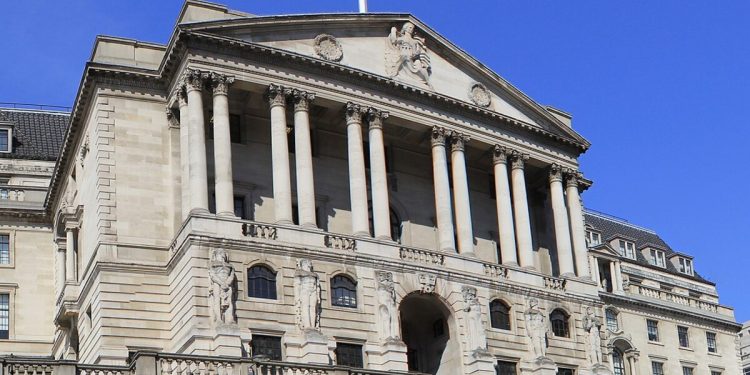
This cumulative account has constantly measured public spending since the inception of the Bank of England on 27 July 1694 when it was appointed as the banker for the government. For more than 300 years, the UK government has run a deficit as a matter of course, with a few exceptions of annual surplus. The national debt grew steadily through the years, accelerating rapidly since the turn of the Millennium.
Who owns the national debt?
On examining the circumstances, government spending ends up in the pockets and bank accounts of ordinary people in the private sector. We are the beneficiaries of the government largesse. The government debt is our credit. The government red ink is the private sector black ink. A part of the national debt gets paid off every time we pay tax. Eventually, every £ created today will be deleted at the Inland Revenue; every £ that constitutes the national debt today will be received in tax payments and ‘paid off’.
The deception, spun to ordinary people by sufferers, is an economic fantasy used to justify the austerity policies that the UK governments of the past 40-50 years have imposed on the population. Public services are underfunded, people suffer involuntary unemployment and underemployment, and the government undermines its own integrity and authority at will through artificially empowering business through light-touch regulation and lack of scrutiny over pricing or value for money of government contracts.
Hopes for a cure or a vaccine?
There appears to be a form of treatment for the condition only known to the corporate world. Mention of the word ‘markets’ in a certain tone or context, appears to have a hypnotic effect and allows large numbers to pass across computer screens of long-term sufferers with little anxiety.
In the UK, speculation has been rife that in reality the term ‘revolution’ may have similar qualities, but this has yet to be tested.
Unaffordability is, of course, the most obvious symptom of the fear of big numbers in politics. The government claims that it cannot raise the funds, through borrowing or taxation, to provide the standard of service that society requires and desires. As the monopoly issuer of a fiat currency, the government has no financial constraint on currency creation. The UK government can purchase whatever is available for sale in £s, including all idle labour.
Unaffordability is a lie causing needless suffering and must be treated as such.
In reality, the ordinary people of the country must work together to eradicate this terrible disease. This condition has no place in a fiat economy. All numbers are acceptable; no prejudice should be aimed at numbers for being too large when public wellbeing is at stake.
More on economics: