



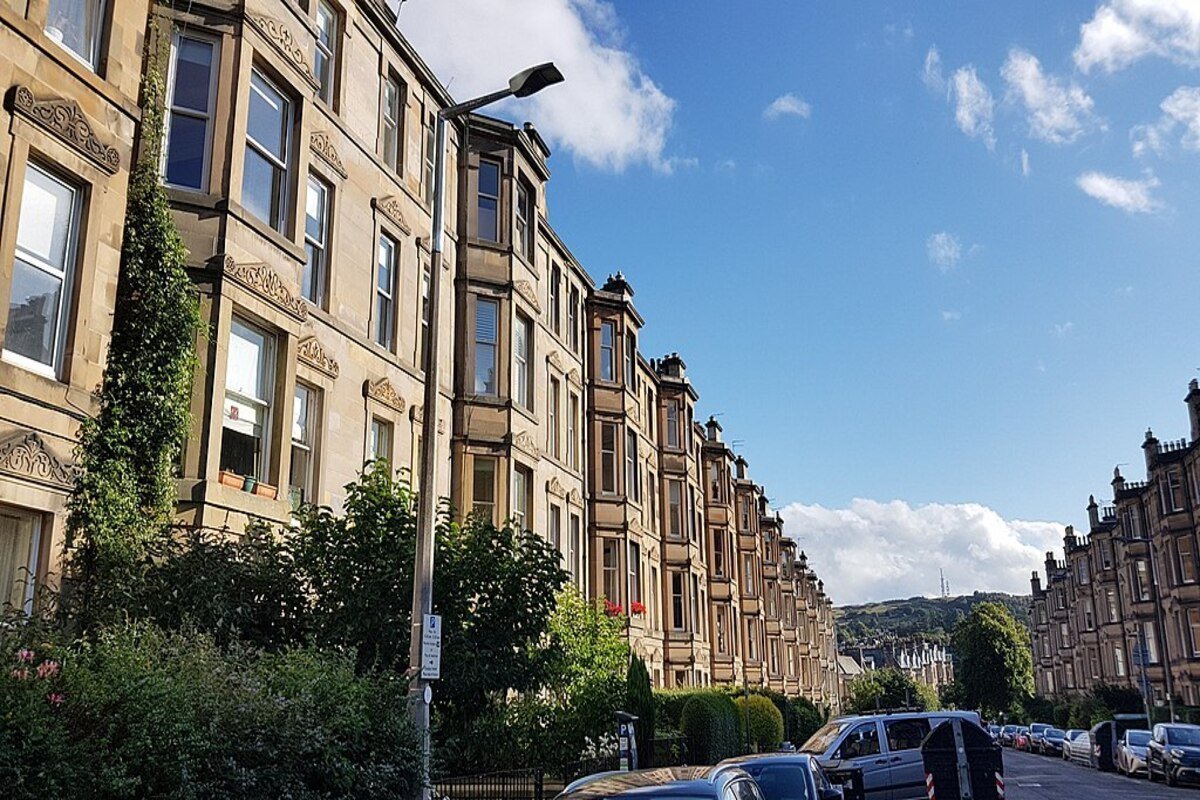
These arguments are incoherent in several respects. The fact that second homeowners and short-term lets are bundled together as a twin problem, ignores the disparity in the economic impact of these two very different sectors. This should be a success story, as the Scottish tourism sector thrives in a struggling global economy. Instead, these sectors are singled out as a major factor in a national housing crisis.
Second homeowners own multiple properties for personal (and possibly wider family) use. As a result, at any time, one or more of these properties is not used and lie vacant. These owners have chosen to legally invest in property, and like STL ownership, were actively encouraged by government and the banking sector before the global financial crash.
Second homeowners choose the downsides too. They incur proportionally-higher regular maintenance costs, and in recent years, the additional penalty of massively increased council tax payments.
STL owners, on the other hand, run small businesses. These entrepreneurs bring tourism into areas where visitors are not well-served by hotels and meet the shortfall in accommodation in hotspots where there is increasing demand from tourists. These properties advertise local cafes, shops, attractions, restaurants, and pubs, providing much-needed additional boost to a hospitality sector struggling to meet rising costs from local trade alone.
Feeling the pain and allocating blame
The anger and frustration felt by the general public is understandable. Living standards are falling in the UK while the cost of living rises. Public services and local councils are constantly under threat as the buck of austerity policies, stops there. People see the problems every day and attach blame to whatever seems out of place.
The anomaly could be a key box on a tenement doorway, a homeless refugee begging on the street, the rent being charged by a private landlord or dilapidated shopfronts on the High Street. This should be viewed as a symptom of systemic failure of housing policy and property ownership at the national level. Instead, the problem is mentally reduced to allow anger to be focused on the local manifestation, whether that be second homeowners, migrants or landlords.
A full-time worker should always be able to afford the cost of shelter. However, when the cost of housing escalates, while wages stagnate, communities disintegrate as families are forced away to areas with lower property prices – a form of financial migration. This disrupts relationships and networks and rips individuals from the secure context relied on since birth. Mental health is impacted due to precarity, and anxiety sets in.
Both the UK and Scottish governments hide behind affordability as the cause of their failure to act proportionately on these issues. Both administrations seem to understand that this is a supply and demand problem. Not enough houses are available to satiate demand. If this continues, house prices will continue to rise. The only way to break this feedback loop is to massively invest in public housing. Yet, both UK and Scottish governments are silent on council house programs and insist private investment is the only alternative.
Incompetence or malevolence?
The UK government is lying here. Whether through ignorance or deceit is unclear. The Scottish government does have the excuse of the requirement for a balanced budget through the UK system. The UK government has the treasury keyboard, and as John Maynard Keynes famously said, “anything we can actually do, we can afford”.
Where the SNP leadership is negligent, is in their lack of understanding of the monetary system. By mimicking the UK narrative, they undermine the argument of independence that could bring real benefits, allowing Scots to prioritise resources towards solving the crisis for everyone.
What both fail to understand is that while orthodox economists, businessmen and media view GBP as a unit of exchange and a store of value to the entire economy, the national currency is much more than that. We offer our skills, intelligence, and labour, (working to sustain and advance society) to earn GBP in the UK. The money in our wallets and bank accounts is a receipt for the work done – society and the UK Government’s debt. This is our credit – we own, (not owe) the government debt.
The dreaded “Black Hole”
The national debt, currently approaching £3 trillion, is a representation of a variety of debt that can never be repaid. It is the debt that the population today owes to previous generations for their labour and skills. These inputs were applied to build and maintain the National Health Service, education system, roads, infrastructure and energy grids. The national debt is something to be proud of and not a source of concern.
If £3 trillion is a scary number, then taxation can be raised to reduce it to a more palatable figure. However, so long as inflation is not spiking, the numéraire beside the £ sign is not a financial concern.
The sinister problem with governments failing to grasp this concept is that GBP, not spent today on productive output, means that unnecessary suffering and hardship are imposed on generations to come. The infrastructure we rely on will not be upgraded or maintained to a sufficiently high standard. The health and wellbeing of the workers we will rely on in retirement will be reduced, therefore reducing output of the essentials for life. This applies to all services we complacently take for granted.
Government protection and subsidy of unproductive outcomes, e.g. financial services, insurance, complex tax systems and, most ludicrously, gilt interest payments, demonstrates resources being diverted away from functional, societal advancement.
Spending now is future prosperity, not financial liability
Perhaps we should look at ourselves, and question why we voted these entitled wealthy people into an office where they hold the balance of wellbeing and suffering for ordinary people, with no understanding of what it was to live an ordinary life in Britain today. Professor Danny Dorling expressed this view, in an excellent presentation at the recent Festival of Politics held at the Scottish Parliament.
What must happen, to counter the housing crisis, is for councils to employ teams of tradesmen, the direct labour department of yesteryear, and build beautiful, insulated, quality homes, available to anyone for a reasonable rent. With the market flooded, the house prices and rents will start to fall, speculative investment will disappear and the whole sector will re-calibrate itself.
Controls could be set up to insure the current housing stock in the short-term. These could include the ban on buying existing stock for second homes or lets. Anyone wishing to invest in housing supply of any type must build new or upgrade sub-standard accommodation.
Housing hotspots
If the government did feel that price controls were necessary for short-term lets in hotspots like Edinburgh or Skye, then they could affect the same remedy by opening student accommodation, through the summer months, as state holiday rentals or construct newbuild state accommodation in areas like Skye. Through negotiation with the STL sector, a jointly agreed minimum price could be ascertained which the publicly owned lets will never rise above, allowing the private sector to compete on added value.
The private market will be forced to temper their rental demands to achieve a decent occupancy rate, thus protecting tourists from exploitation and the resulting reputational damage to the Scottish tourism industry. The public offer signifies a ‘floor’ on quality and price, that through time and adopted innovation, should drive improvement through the entire sector.
The sections of the population who organise campaigns of mass letters of complaint against the approval of short-term let licences, or sneer at refugees who have been granted asylum in Scotland or shake heads as the public library gets sold must open their eyes and focus their discontent on the people who actually influence their living standards.
Until the campaign is taken to Westminster, through the Secretary of State, or the Scottish Parliament demanding independence – allowing Scots to allocate their own vast resources without international interference – there is no hope of meaningful change.
More on economics:
CLICK HERE TO DONATE TO OUR CROWDFUNDER
HELP US BECOME STRONGER SO THAT WE CAN CONTINUE TO DELIVER POWERFUL CITIZEN JOURNALISM!





