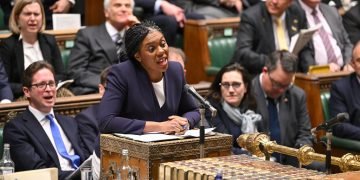




I’ve been thinking about writing this for quite a while. The resignation of Sir Keir Starmer has spurred me into some sort of action. He resigned on the morning of Monday 22 June 2026, announcing his departure once the issue of his successor is resolved. I suppose that’s as good a juncture as any to say what I think about the current situation in the world.
Starmer’s resignation marks the end of a political era, but in reality, it is another chapter in a story that began nearly two decades ago. The issues that brought down Starmer were not created by him, nor by the Labour Party. They emerged from the financial crash of 2008 and the way governments across the Western world responded to it.
I have no doubt that, among others, the economic problems in the United Kingdom were a major factor in the public’s dissatisfaction with Starmer. Some would argue he made mistakes, and so too the economic problems in the United Kingdom were a major factor in the public’s dissatisfaction with the chancellor who despite being economically competent as a conservative (small c) economist (the markets liked her) was politically naive and lacking in imagination. Starmer’s loyalty to Reeves probably contributed to his political demise.
We need to look on a far wider scale to see what the problem is in both UK and world politics. The UK has been in political decline since 2007-8 and the global crash caused by casino banking, typified by the Lehman Brothers collapse, and the resulting reaction across the world. Gordon Brown came up with a rescue plan for the world economy (acknowledged by Obama) when he suggested that governments had to bail out the banks and those who invested in them otherwise the global economic collapse would be catastrophic.
That rescue plan came with a heavy cost. The upside was that nations decided to regulate banks and investors so that they could not take massive risks with funds they did not have. So the new regulations made such a collapse much less likely in the future. But nevertheless, governments injected huge sums of money into the economy to save the banks. That transferred money belonging to the populace of different countries countries into the institutions that had been gambling and profiting at their expense.
Since 2008, world governments have tried to address what happened in how they shape their own economies. In the United Kingdom, the Tory government which took over from Brown, blamed the global financial crash on Labour and decided to embark on the most rapid replacement of the debt funding incurred in bailing out the banks with severe austerity.
They would point to Alistair Darling, the Chancellor at the time of Brown’s departure, as having contemplated an austerity budget himself, but their austerity measures were far more severe than anything contemplated by Darling, and many competent economists have argued that austerity budgets completely stifle growth.
Austerity may prevent a further worsening of debt, but it also kills the prospect of economic recovery through choking off the means, invest, and to recover healthy growth in an economy. So Britain, and the world, entered a period of stagnant growth, with governments incurring high debt with high interest payments, which throttled a period of stagnant growth, with governments incurring high debt with high interest payments, which throttled attempts to address the economic problems that always face governments, while at the same time hampering governments’ ability to encourage investment in infrastructure, technology and innovation, which would have been the means to grow out of the malaise with production multipliers.
Most of the West bumbled on, trying to cope as best they could with the economic problems that ensued across the world following the financial crash. The USA did better than many economies, if you ignore the national debt, which it can sustain because of the dollar’s status, but before most countries could really recover, the Covid-19 pandemic struck.
The Pandemic
The Covid-19 pandemic caused a shockwave in economies across the world. Industries were not able to function. Many people were unable to work, meaning that governments stepped in to provide their citizens with the income necessary to survive periods without work, on top of providing employers and industries with funds to prevent them collapsing and going bankrupt. Vast sums were spent to prevent complete economic collapse in most countries.
This was a rerun of the global financial crash of 2007-8 for a completely different reason and in different sectors, but once again, it was a huge transfer of government money into the private sector. Some might say that much of the money provided to citizens to pay their rent, mortgage, utility bills and to buy food to survive all ended up in the hands of the rich, by which I mean the owners of assets and companies.
Of course, governments had to act because the pandemic could have been an economic disaster, but it was yet again an example of governments bailing out the owners of assets . Governments tried to compensate for the outflow of public money by normal revenue raising, largely from the population, rather than from the asset owners who were the real beneficiaries. The National Audit Office reports that the Covid-19 pandemic resulted in very high levels of public spending. As of 2026, estimates of the total cost of government Covid-19 measures range from about £310 billion to £410 billion. This is the equivalent of about £4,600 to £6,100 per person in the UK.
Since the pandemic, many governments have struggled with their economies, with governments not having the money to invest in the things that they feel they need to do, and unable to borrow the money because of the debt they now have. This is happening across the world.
The USA, because of the unique position of its huge economy and the fact that the dollar is a benchmark international currency, was able to borrow when many other countries could not. President Joe Biden, when he came into office, realised that investment was the only way to rescue the American economy. He invested in infrastructure, programs that would promote employment, and industries that had the potential to turn the American economy around.
He was very successful, but when it came to his re-election campaign, the American public was not convinced. Many voters judged economic conditions through their lived experiences rather than through economic data. Improvements that were evident in national statistics failed to translate into political support for Biden’s policy. A very biased media landscape, and a massive social media message that was contrary to the Democrat policies compounded the misunderstanding.
It became a cause célèbre that egg prices were the barometer of Biden’s lack of success. Egg prices did fluctuate, often being very high, but it was nothing to do with government policy. The US was experiencing an avian flu pandemic, leading to a cull of chickens, causing eggs to be scarce and forcing up the prices.
The election loomed at the end of Biden’s first term, and the electorate were already convinced that Biden was not an economic success, despite all the evidence to the contrary. Biden’s health came into question. Kamala Harris became the candidate. She failed to explain Biden’s economic success, and the rest is history.
Donald Trump promised to lower prices, keep out of overseas wars, and make Americans better off. Project 25, which Trump claimed to know nothing about, became the blueprint for dismantling US democracy, while Trump ruled like a mafia godfather terrorising the GOP, and embarking on wars in South America and the Middle East.
I began writing about Trump’s second presidency and soon realised that was a pointless task. Documenting even the monthly events is beyond me, let alone the weekly. And I soon realised I was looking at a flurry of actions, ideas, and policies that would be best documented with the optics of history. Many books will be written about Trump’s presidencies, and I suspect none of them will be flattering.
Stay tuned for more thoughts on this.