



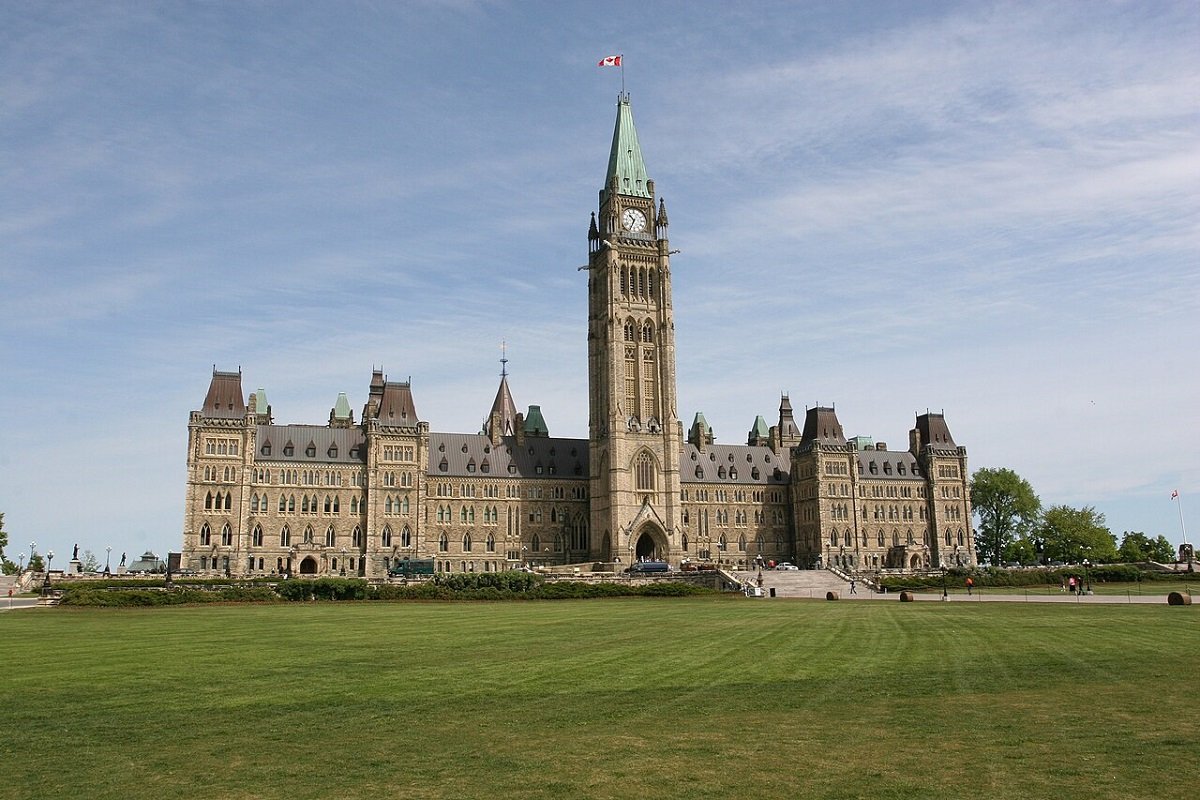
Mark Carney, 60, the incumbent Canadian prime minister for just over six-weeks, former Governor of the Bank of Canada (2008-2013) and the Bank of England (2013-2020), has renewed the Liberal Party of Canada’s lease on government. Like a Phoenix rising from the ashes, the Liberals – who only last New Year’s Day were projected to be nearly eradicated as a political force – now rally behind Carney as he leads a minority government.
Minority parliaments are not rare to Canada’s political landscape. Since 2004 there have been seven elections of which five resulted in minority governments. The governing party works with sectors of the opposition to support legislation. Somehow it works and it is speculated that minority governments are preferred by the electorate.
Although seven races are still too close to call and – under Election Canada rules – some may trigger a judicial recount. As of 9am, the day after election night, Carney’s Liberals were elected or leading in 168 ridings in the 343 seat parliament; four seats short of a majority. The Conservatives, led by Pierre Poilievre, 45, were leading or elected in 144. The Bloc Québécois lost seven seats reducing their tally to 23. The big loser was the New Democratic Party (NDP) who entered the election with 25 seats but lost 18.
Of the major party leaders, only Carney and the Bloc’s Yves-François Blanchet won their respective ridings. All the others, including Poilievre, lost.
In early January of this year it was safe bet to say Poilievre was on track to become the next resident of 24 Sussex Drive, Ottawa. The Conservative were 23% ahead in the polls when Justin Trudeau announced his resignation on 6 January 2025.
By the end of March, due in part to US President Donald Trump’s territorial ambitions and incomprehensible tariffs, with PM Carney breathing new life into the Liberals, the world flipped for Poilievre as his Conservatives trailed in the polls on election day. If Trump had not threatened Canada’s sovereignty or hadn’t sanctioned crippling tariffs on key Canadian resources, the outcome of this election might well have resulted in a Conservative win.
We are masters in our own home
In his victory speech to the Liberal faithful at his Nepean riding rally, which he won handily, Carney congratulated each of the party leaders. To a national television audience he added, “President Trump is trying to break us so that America can own us – that will never happen! We will strengthen our relations with reliable partners in Europe, Asia and elsewhere.
”And if the United States no longer wants to be in the forefront of the global economy, Canada will. We are masters in our own home. Because this is Canada, and we decide what happens here.”
Grise Fiord to Haida Gwaii
Election day was the postscript to a gruelling 37-day campaign spanning six time zones, 10 provinces and three territories – all but the three maritime provinces are larger than the UK. Watched by millions of Canadians on any of the six national television networks, election night was the most exciting event of the evening: with the possible exception of the Weather Network’s local forecast radar updates.
Praise to Elections Canada ‘blackout rules’ that stipulate politicians are prohibited from campaigning on polling day – proof there is a God?
Returning officers and their workers in more than 60,000 polling stations – from Grise Fiord on the southern tip of Nunavut’s Ellesmere Island in the high Arctic to Windsor Ontario just south of Detroit USA; St John’s Newfoundland and Labrador to Haida Gwaii British Columbia – counted millions of ballots after the polls closed. Media networks chomped at the bit to forecast key constituencies and be the first to accurately declare the overall winner; bragging rights being the only reason for doing so.
On the day of the long night
Political junkies were glued to televisions anticipating who might win a majority of seats in the House of Commons – a hellish prospect for non-junkies. Or will the drama of a possible minority government stretch into the night? A night of the long count would be entertaining if it means watching broadcast anchors and journalists running out of overused political clichés.
The incumbent prime minister, or he who is in-waiting, likely pondered which of the two speeches they would deliver as the evening wore on: victory or concession, both to include a call for unity while extending congratulations and commiserations to party candidates.
After the people have spoken at the altar of democracy – the ballot box – they will now be punished with days and weeks of repetitive analysis by political pundits and seasoned correspondents. Talking heads from think tanks to universities will be dragged out of obscurity and heard across the airwaves or semi-immortalised in print. There will be those who will declare – and have actually convinced themselves it is God’s honest truth – they “knew the outcome all along.”
Canada, eh?
The last time most of the foreign media paid this much attention to a Canadian election was in 2015 when Justin Trudeau – son of a former flamboyant, progressive and controversial PM – was elected leader of the Liberal Party and Canada’s PM. Then came the media fun-photos of the handsome Trudeau with the Trump women; first Ivanka (2017) then Melania (2019).
The 2025 election campaign has witnessed extensive media coverage from not only Canada and the US, but also here in the UK as well as Australia, Brazil, France, India, and Al Jazeera.
The ‘elephant’ in the room
Ten years can be a lifetime in politics. With his popularity dropping like the mercury in a Yukon thermometer, on 6 January 2025 Trudeau – the flamboyant, progressive and controversial PM – announced he was stepping down. Two weeks later the ‘elephant’ was sworn in as President of the United States. A month earlier Donald Trump referred to Prime Minister Trudeau as “governor of the Great State of Canada”, and said Canada should become the 51st American state.
In March 1969, Canadian PM Pierre Trudeau spoke before the Washington Press Club where he said that living next to the US is like sleeping with an elephant. He added, “Americans should never underestimate the constant pressure on Canada which the mere presence of the United States has produced. We’re different people from you and we’re different people because of you.”
Enter Mark Carney, former Governor of the Bank of Canada (2008-2013) and the Bank of England (2013-2020). On 14 March 2025, two days shy of turning 60, Carney was sworn in as the 24th Prime Minister of Canada. He was elected the leader of the Liberal Party the previous week with 86.84% of the vote of all party members.
During his speech at the Liberal Party leadership convention in Ottawa on 9 March, former Prime Minister Jean Chrétien, 90, sent a message to Trump, “From one old guy to another old guy. Stop this nonsense!” Chrétien added that Trump has united Canada as never before.
In harmony with all the party leaders in the 2025 federal election, Carney, Conservative leader Pierre Poilievre, the New Democratic Party’s Jagmeet Singh, Yves-François Blanchet of the Bloc Québécois, have announced that Canada will not become a part of the United States. The vast majority of Canadians share that sentiment, albeit there are some Maple Leaf MAGA supporters.
However, the Trump-card has overshadowed key issues that are not only challenging Canada but other countries as well: healthcare, housing, gender inequality, poverty, climate change, indigenous issues, education, energy resources, employment, just to name a few.
More in world.
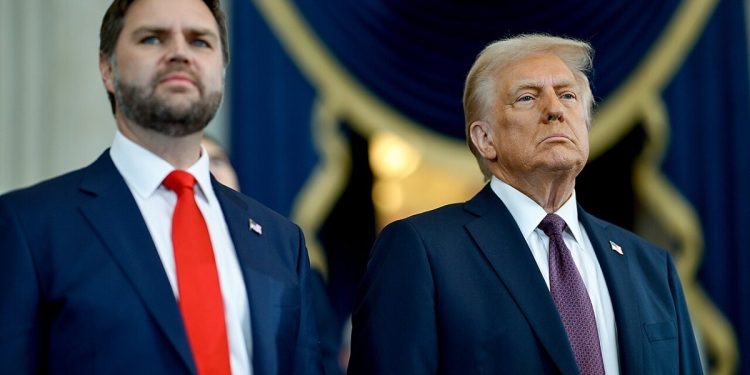

Your voice, your story – independent powerful citizen journalism.
Consider supporting us monthly
A newspaper costs approximately £60.00/year, you can enjoy Bylines Scotland for £36.00/year – please think about supporting independent citizen journalism





